August 10, 2026
Hannah Selders internship in Glasgow
ScaDS.AI Dresden/Leipzig
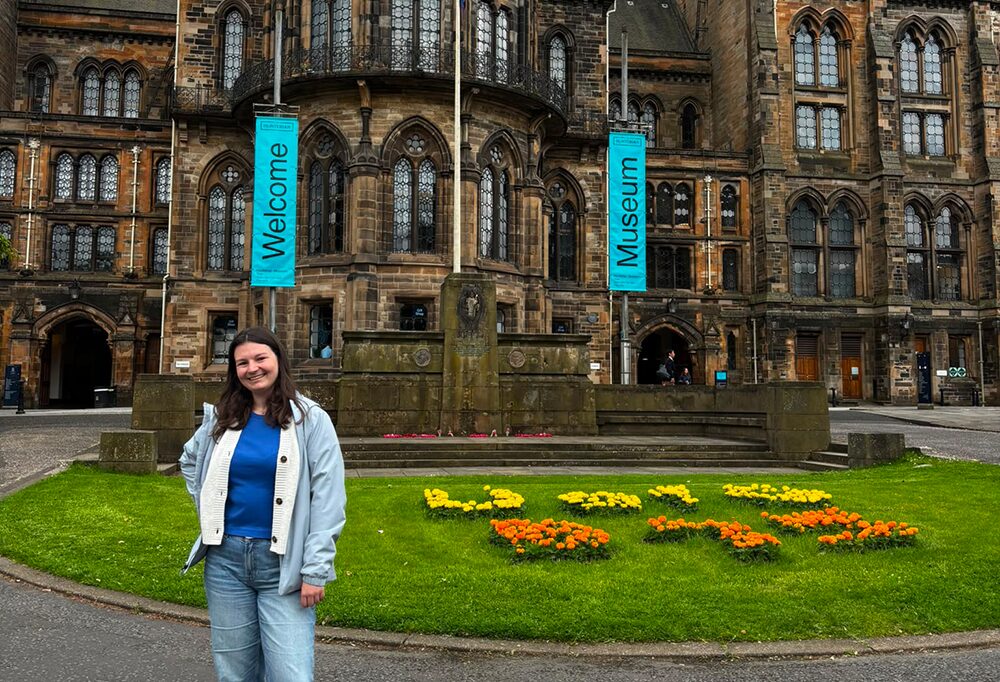
From 1 May to 1 August, I had the opportunity to spend three months at the University of Glasgow as an intern within the DIFAI project. After meeting members of the Designing Interaction Freedom via Active Inference (DIFAI) group during last year’s summer school and learning about their research, I became interested in their work and wanted to experience their research environment firsthand. This internship gave me the chance to contribute to their research on Active Inference while also experiencing academic life at the University of Glasgow and exploring Scotland.
Working in the DIFAI Group
During my internship, I joined the international DIFAI research group, a project that explores how advanced sensors, machine learning, and Active Inference can be used to create more adaptive human-computer interaction. Active Inference is a computational theory of intelligent behavior that explains how people perceive, plan, and act by continuously updating their beliefs about the world and reducing uncertainty. Rather than simply responding to user input, these systems aim to anticipate users’ needs and adapt their behavior accordingly.
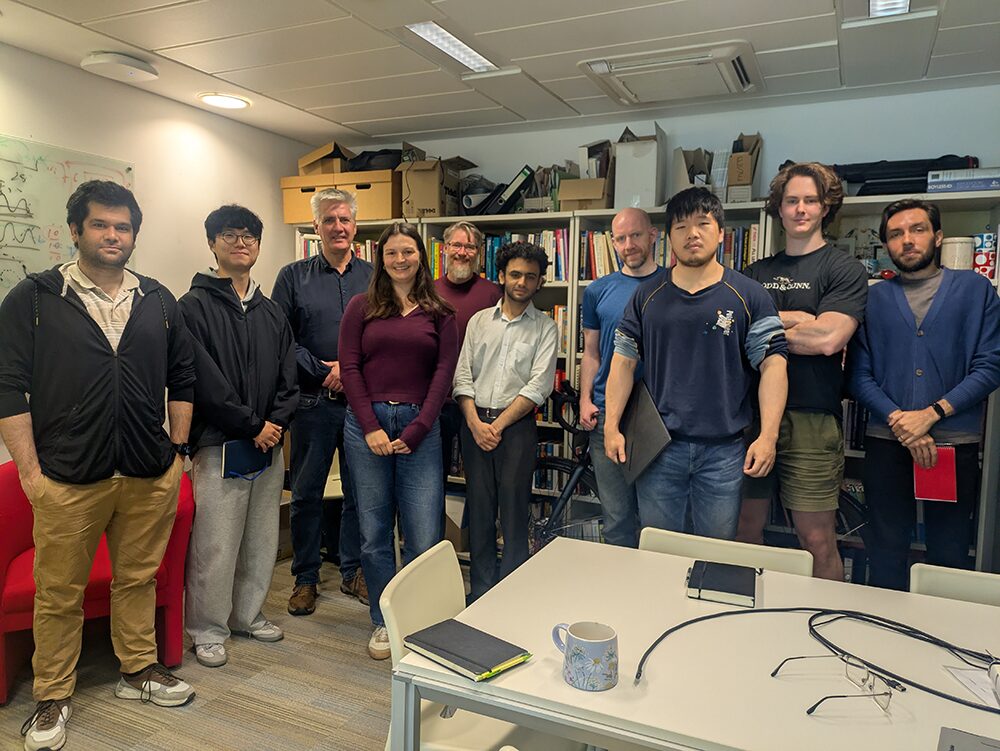
My project focused on improving the planning process within Active Inference models. To evaluate different approaches, I implemented a series of example tasks involving one or two interacting agents. In the multi-agent scenarios, the agents also required a form of Theory of Mind, the ability to reason about and predict each other’s behavior. Working on this project introduced me to Bayesian inference, sampling algorithms, and computational models of Theory of Mind, while giving me a much deeper understanding of Active Inference itself.
One of the aspects I appreciated most was the supportive research environment. Through regular supervision meetings and discussions with colleagues, I was able to ask plenty of questions, receive valuable feedback, and steadily deepen my understanding of these topics.
Beyond the internship
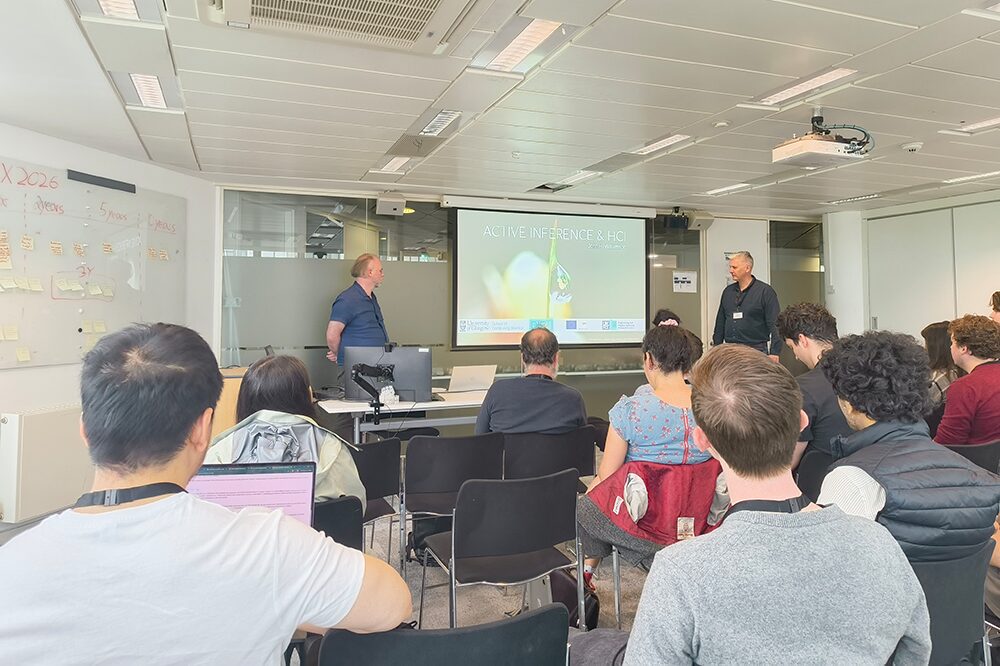
During my internship, I also attended the 10th Summer School and Symposium on Computational Interaction (S³CIX). The event brought together researchers from across Europe to exchange ideas on computational interaction through keynote lectures, workshops, and discussions. I had the opportunity to present a poster on my own research, receive valuable feedback, and learn about a wide range of exciting projects from other participants.
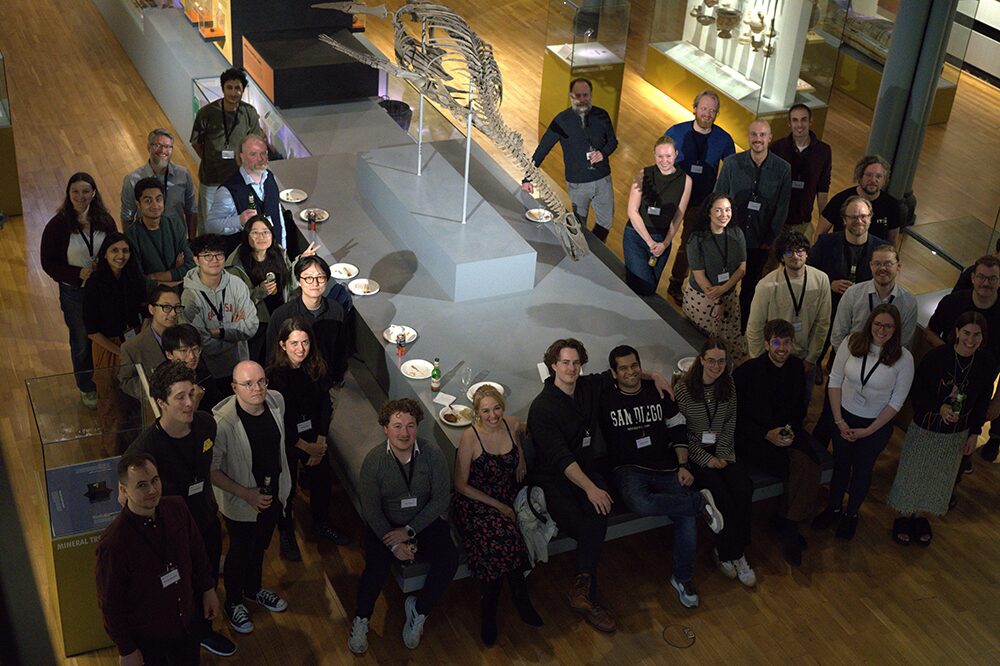
The symposium was not only academically inspiring but also a great opportunity to connect with fellow researchers. Social activities, including a reception at the Hunterian Museum and an excursion to Loch Lomond, made it easy to continue conversations outside the lecture halls and get to know people from different research groups.
Discovering Glasgow
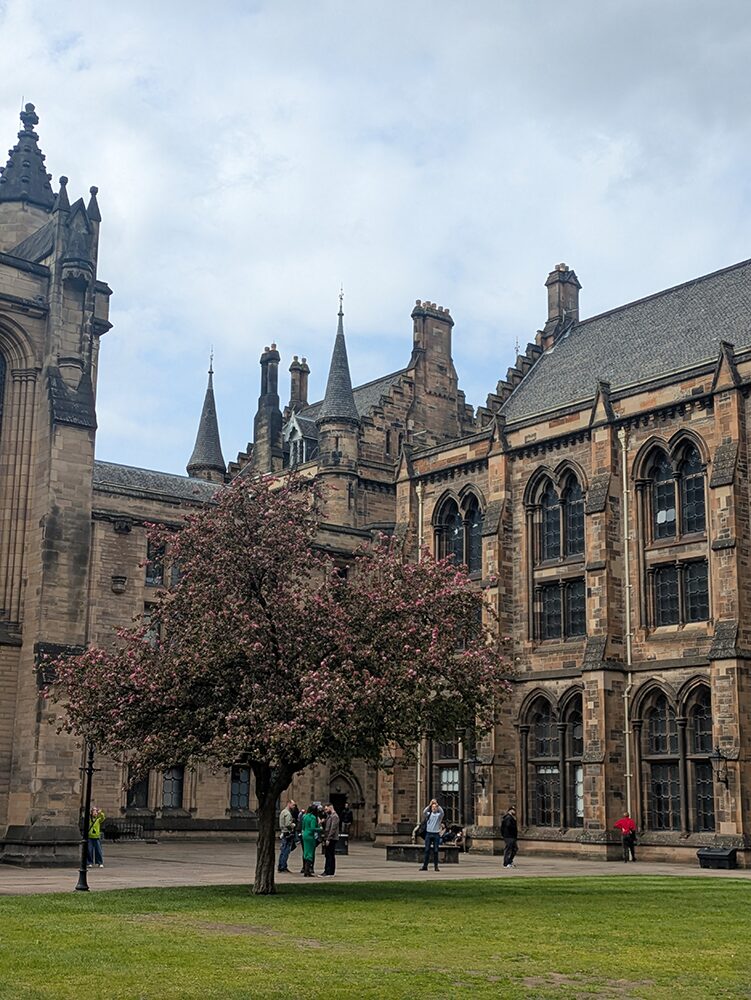
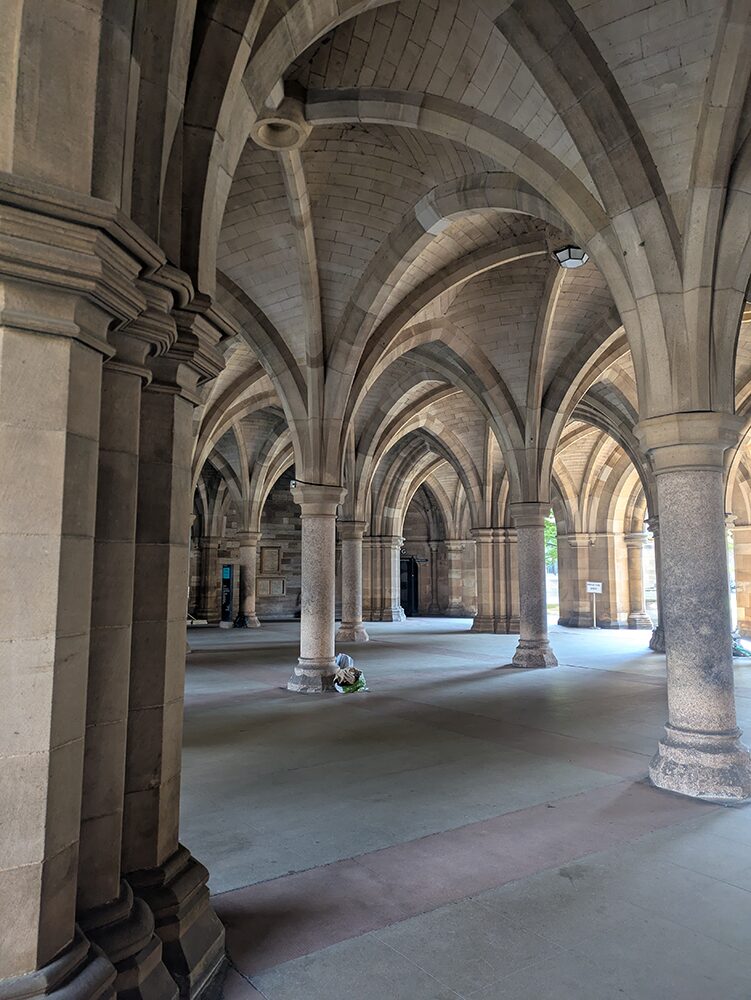
Living in Glasgow for three months was also a rewarding experience. The University of Glasgow provides a beautiful setting to work, with its historic buildings, cafés, and sports center. Arriving in May also meant I was fortunate to experience Scotland during the spring and summer, including more sunny days than I had expected.
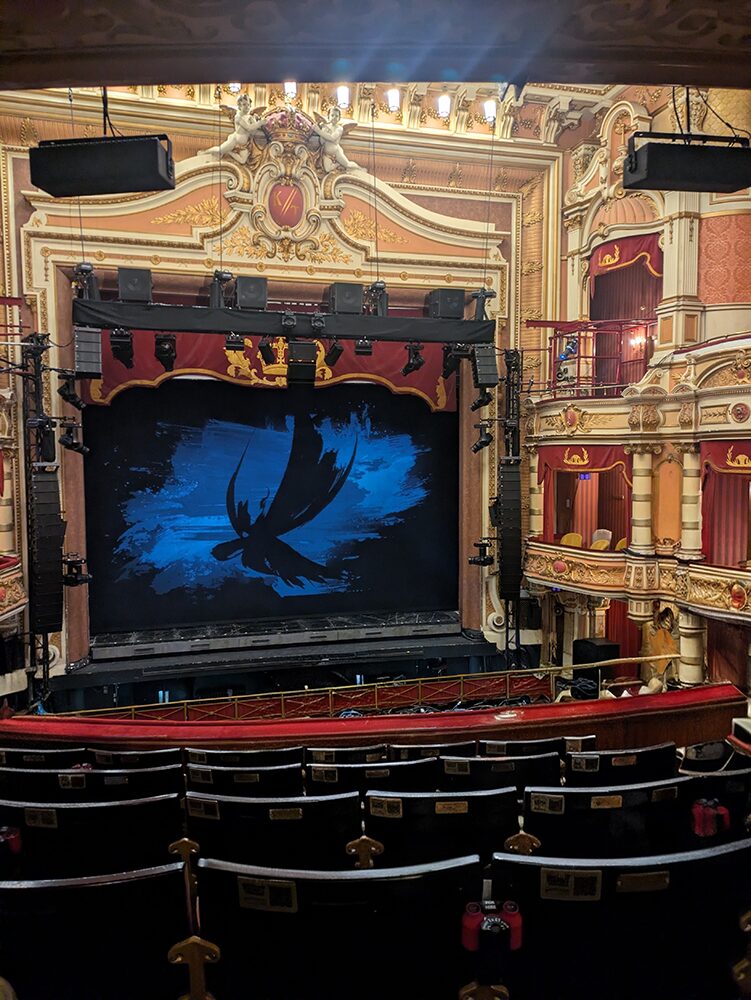
Outside of work, I enjoyed exploring the city’s cultural scene by visiting museums, attending musicals, and wandering through the lively West End. Glasgow’s many parks quickly became some of my favorite places to relax, whether for a walk or simply to read a book. Above all, I found the people to be very welcoming.


Exploring Scotland on the weekends
One of the greatest advantages of living in Glasgow is its excellent location for exploring the rest of Scotland. I spent many weekends hiking and visiting some of the country’s most beautiful landscapes, including Loch Lomond, the Isle of Bute and the Isle of Arran. I also enjoyed learning more about Scotland’s rich history through visits to places such as Stirling and Edinburgh, with their impressive castles and historic monuments.
These trips were a perfect complement to the internship, providing a chance to unwind after the working week while experiencing the incredible diversity of Scotland’s landscapes and history.
Summing up and looking back
Looking back, these three months in Glasgow were both professionally and personally rewarding. Working on Active Inference gave me the opportunity to deepen my understanding of Bayesian inference, stochastic modelling, and computational models of Theory of Mind, while contributing to an exciting research project. Beyond the research itself, I enjoyed meeting inspiring researchers, exchanging ideas, and learning from people with different backgrounds.
At the same time, living in Glasgow allowed me to experience everyday life in Scotland and explore many beautiful places across the country. I am grateful for the opportunity and will look back on these three months with great memories!



funded by:



ScaDS.AI Dresden/Leipzig (Center for Scalable Data Analytics and Artificial Intelligence) is a center for Data Science, Artificial Intelligence and Big Data with locations in Dresden and Leipzig.


Dresden
Visitor address
Technische Universität Dresden
ScaDS.AI Dresden/Leipzig
Bürogebäude Strehlener Straße
Strehlener Straße 12, 14
01069 Dresden
ScaDS.AI Dresden/Leipzig
Bürogebäude Strehlener Straße
Strehlener Straße 12, 14
01069 Dresden
Postal address
Technische Universität Dresden
Zentrum für Informationsdienste und Hochleistungsrechnen
ScaDS.AI Dresden/Leipzig
01062 Dresden
Zentrum für Informationsdienste und Hochleistungsrechnen
ScaDS.AI Dresden/Leipzig
01062 Dresden
Leipzig
Visitor address
ScaDS.AI Dresden/Leipzig
Löhrs Carré
Humboldtstraße 25, Uferstr. 11
04105 Leipzig
Löhrs Carré
Humboldtstraße 25, Uferstr. 11
04105 Leipzig
Postal address
Universität Leipzig
Data Science Center ScaDS.AI Leipzig
Internes Postfach: 322001
04081 Leipzig
Data Science Center ScaDS.AI Leipzig
Internes Postfach: 322001
04081 Leipzig
Quicklinks:
Copyright 2026 © SCADS.AI Dresden/Leipzig – All rights reserved.