August 5, 2026
From Leipzig to Daejeon: My First Conference Experience at DH 2026
ScaDS.AI Dresden/Leipzig
This report was written by ScaDS.AI research assistant Nils Hamann.
In late July, I traveled to Daejeon, South Korea, to attend the Digital Humanities Conference 2026 (DH 2026, July 27) and present my Bachelor’s thesis on Textum, an open-source, offline text recognition application I developed in collaboration with the Bergen-Belsen Memorial. It was my first academic conference, and my first conference talk.
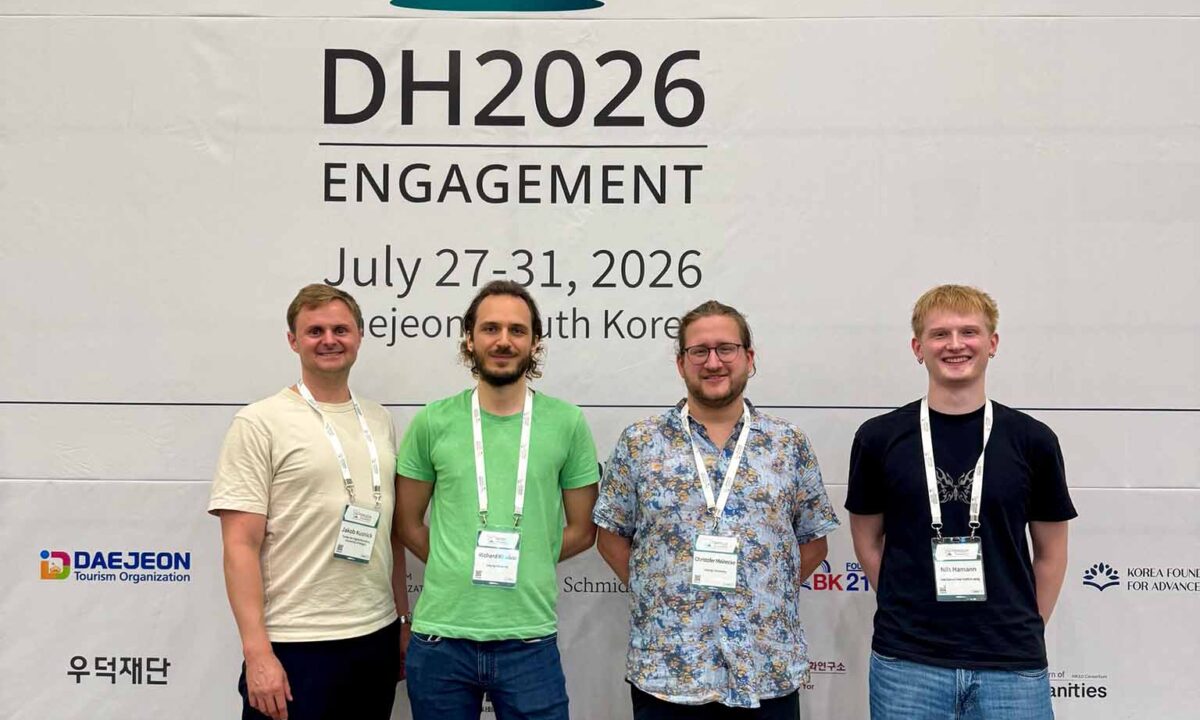
I wasn’t traveling alone: Richard Khulusi and Christofer Meinecke, both from Leipzig University, made the trip with me, each presenting their own papers at the conference. It was reassuring to have familiar faces around in such a new environment, especially since Richard had also supervised my thesis, so in a way this trip closed the loop on the whole project.
Getting to the other side of the world
The trip started with a long-haul flight from Frankfurt to Incheon, followed by onward travel to Daejeon. It was the longest trip I had taken to date. We had planned for that in advance and built in an extra day before the conference, which gave us time to recover from the jet lag before things got started. Korea greeted us with serious heat and humidity right from the airport. Thankfully, air conditioning is everywhere, which made it a lot easier to handle than expected.
Presenting Textum
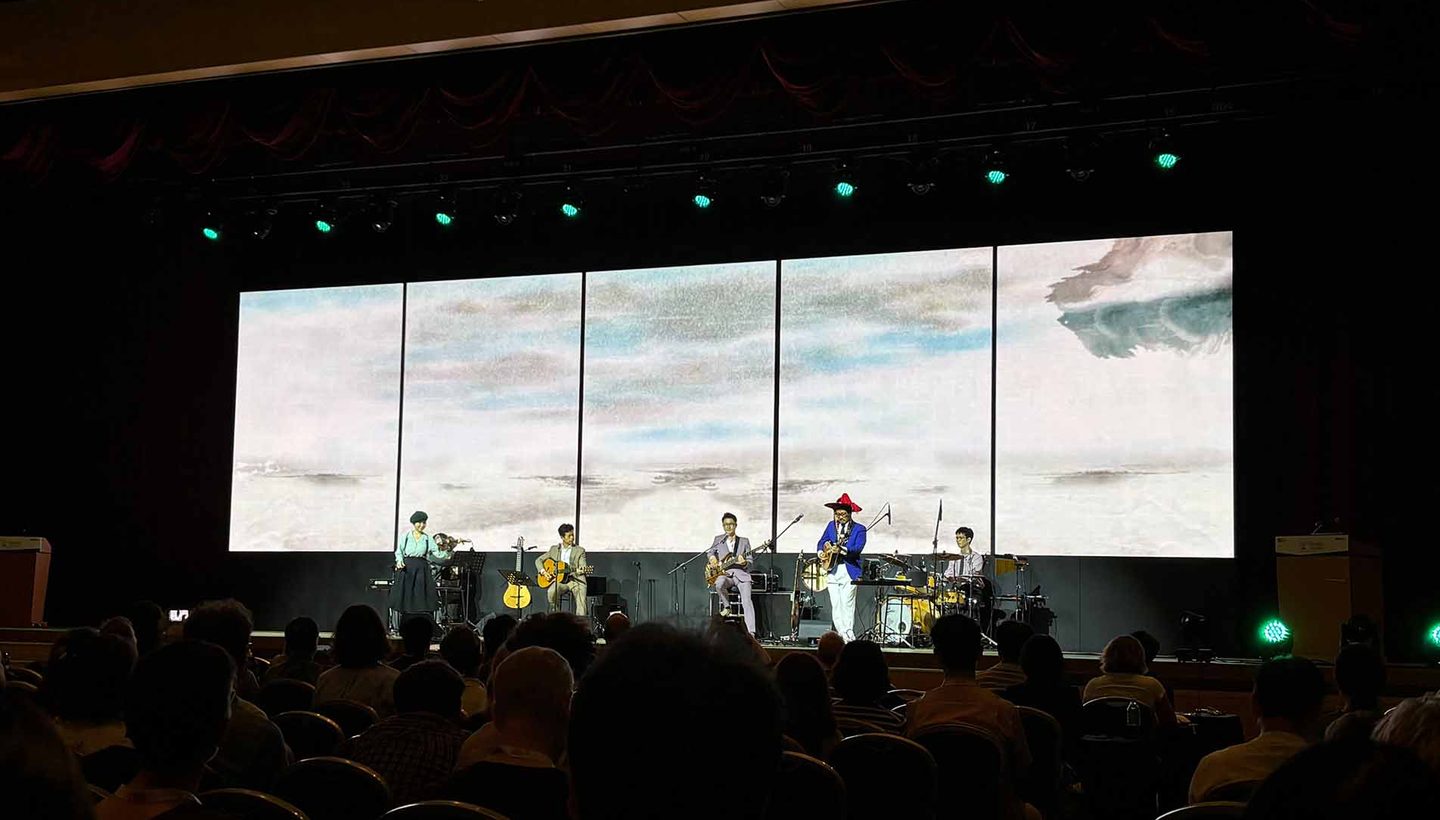
DH 2026 started with two days of workshops, followed by three days of paper sessions that made up the main conference program. Both the opening and closing ceremonies featured traditional Korean music and dance performances, which was a memorable glimpse into the local culture. I attended a couple of the workshops and spent the rest of that time settling in, getting a feel for the venue, and putting the finishing touches on my own talk.
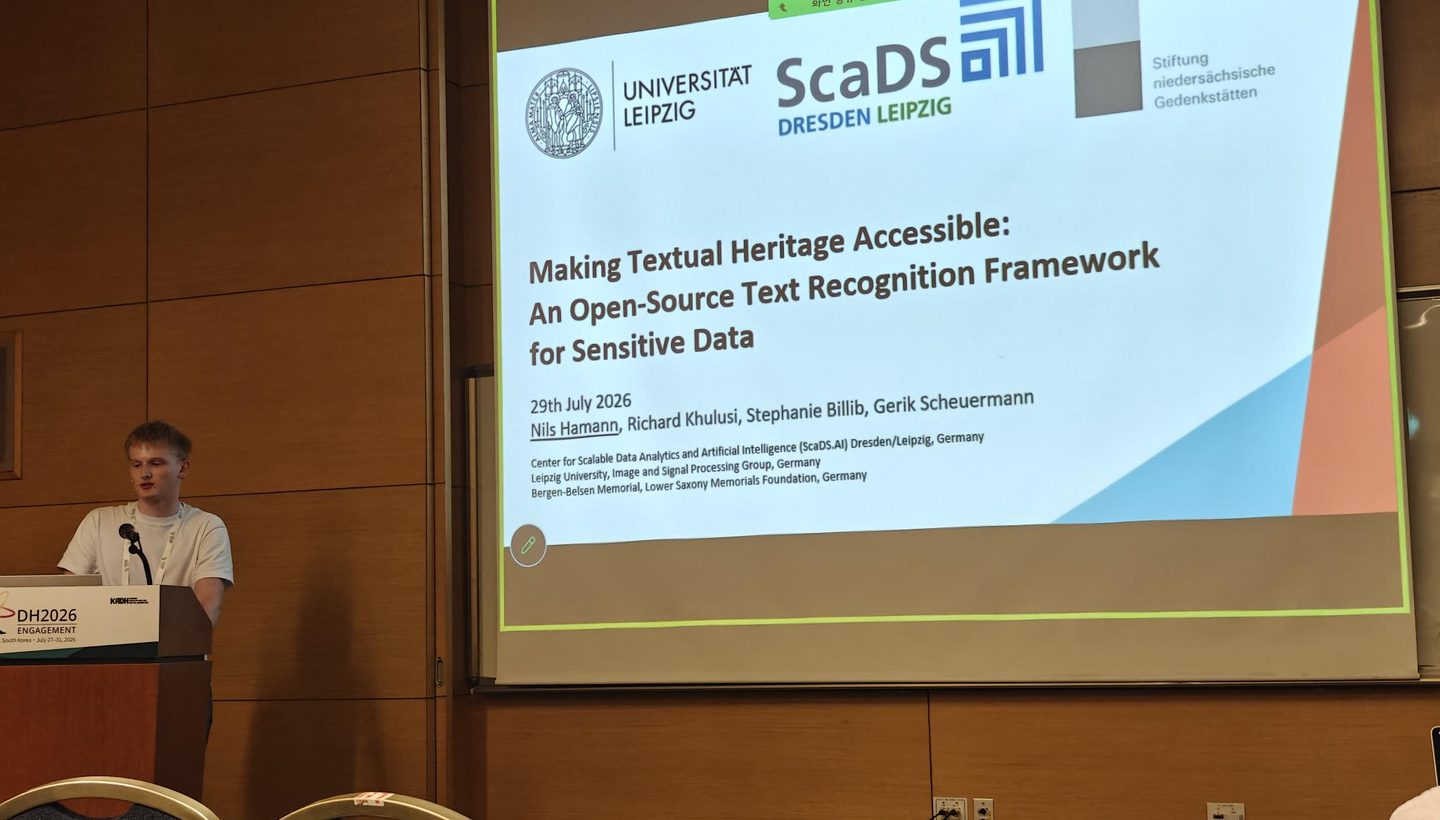
My own presentation was a 20-minute long paper talk on Textum, an open-source, offline application built to help smaller cultural institutions like memorials and archives digitize handwritten and printed historical documents without depending on paid, cloud-based tools such as Transkribus. The project grew out of a very concrete need: 43 handwritten diaries held by the Bergen-Belsen Memorial, all of them first-hand accounts written by concentration camp prisoners inside the camps. The goal isn’t just to preserve these fragile originals, but to make them digitally accessible, both for the memorial itself and for further research. Textum runs entirely locally, which matters a lot given how sensitive these documents are.
Funnily enough, my ThinkPad did not survive the trip to Korea, and it died on me two days before my talk. The same laptop had also died on me exactly a week before my Bachelor’s thesis deadline last year, so at this point I’m kind of convinced it just doesn’t like this project, especially because the motherboard was fully replaced. In the end it was fine, I finished preparing my slides on my iPad instead.
As it was my first-ever conference talk, I was admittedly a bit nervous beforehand. But after enough rounds of practice, everything fell into place and the talk went well. The Q&A afterward was lively, with plenty of questions and interest from the room.
Between sessions
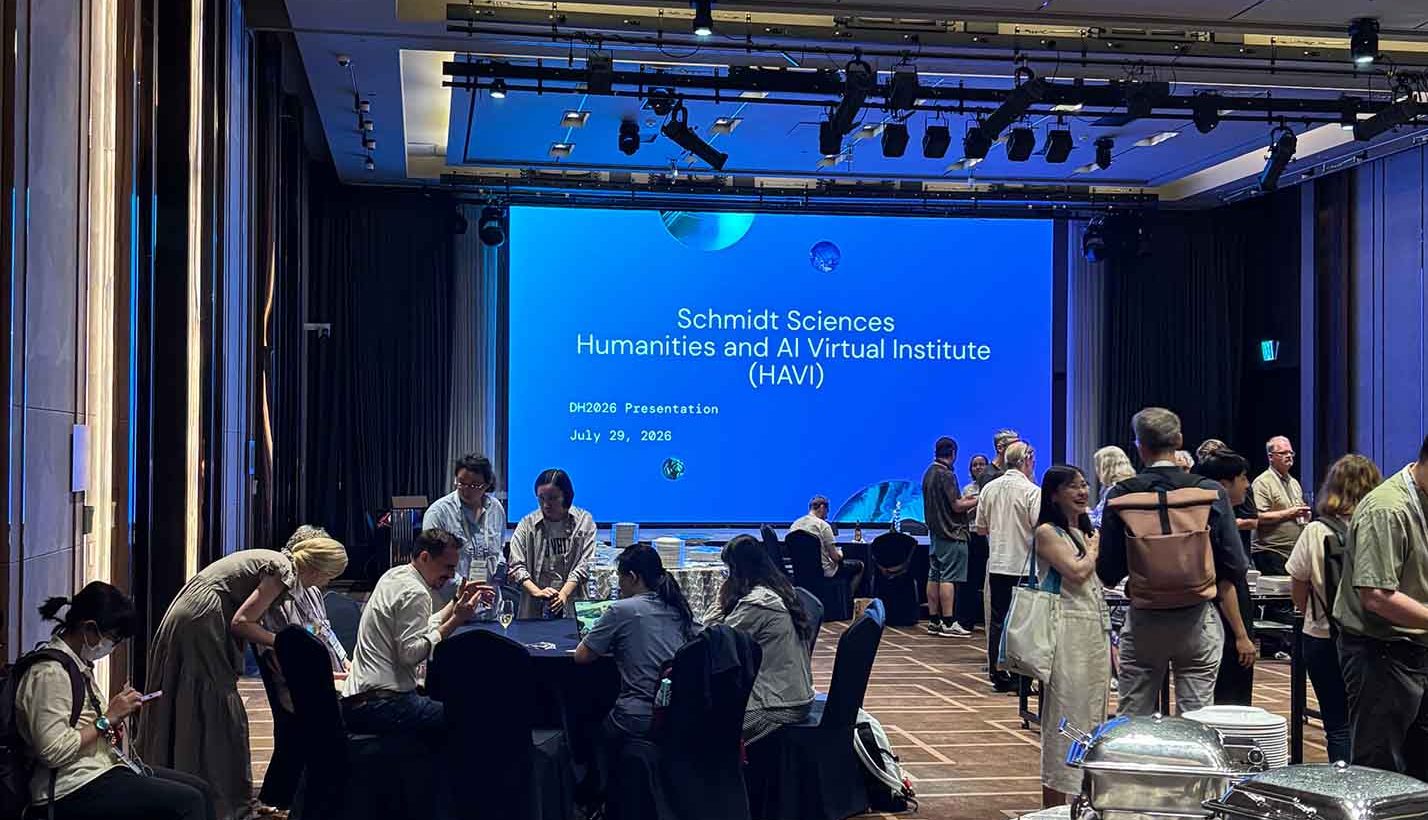
Some of the nicest moments of the week happened outside my own session, in the hallways and coffee breaks, swapping first-conference stories with other early-career researchers who were also presenting for the first time and hearing about the very different problems they were each working on. One evening a few of us walked over to Sungsimdang, a bakery so famous across Korea that I could see its queue stretching down the street from my hotel window at almost any time of day. It was worth the wait, their pastries are genuinely excellent, and it turned into a nice way to explore a bit of Daejeon together outside the conference halls.

Exploring Korea
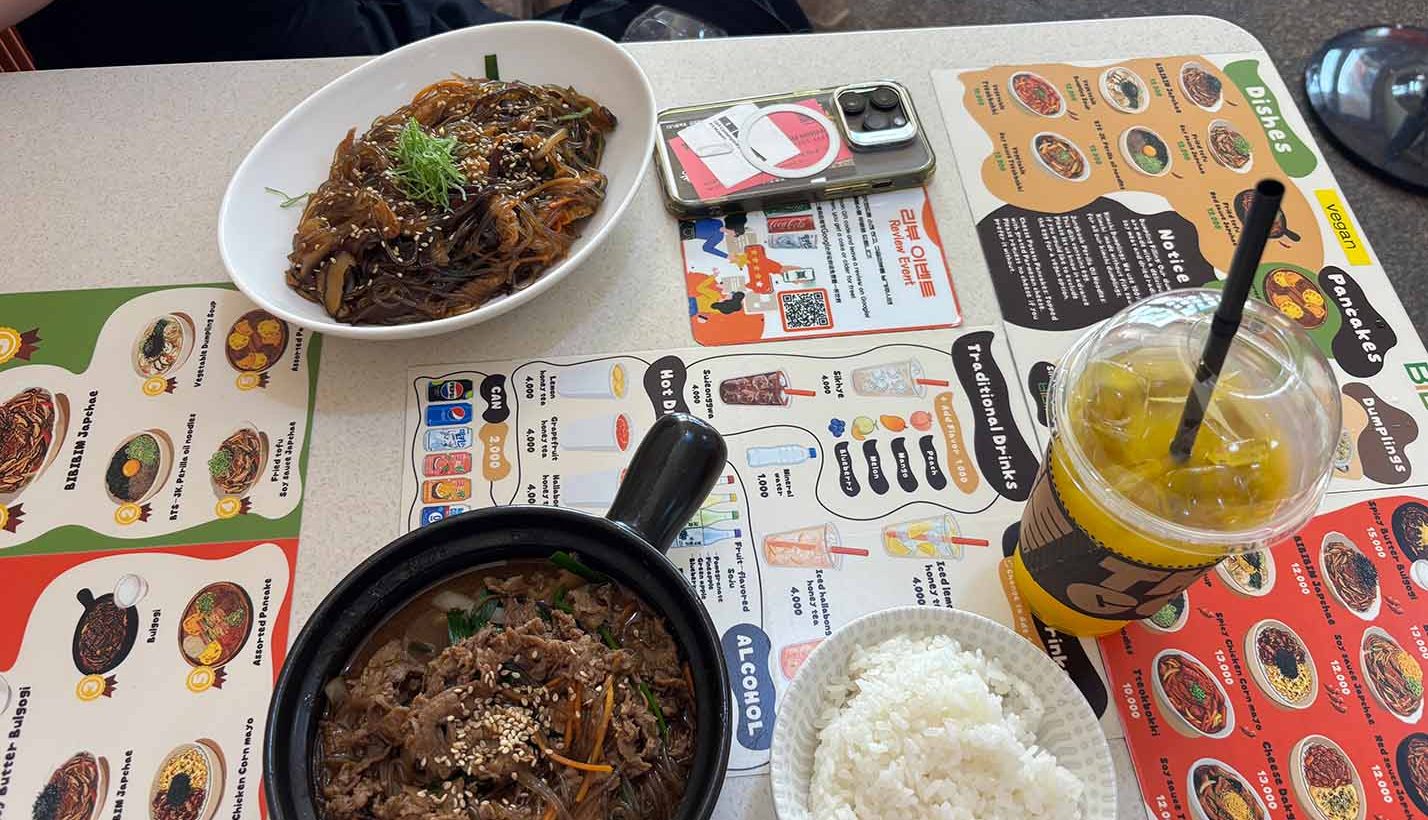
Thanks to the Saxon state law allowing you to combine business trips with private stays, I was able to stay for a few more days in Korea. From Daejeon I traveled on to Busan, a popular weekend getaway on the southern coast, and then to Seoul, the country’s densely populated capital. In Seoul I spent my days visiting temples and museums, trying to see as much of the city as two legs and my T-Money metro pass would allow. Beef bulgogi, street food, and lots of cold drinks kept me going along the way. Korea in late July and early August meant two weeks of 33-35°C with high humidity, a proper test of stamina between sightseeing and simply getting from one place to another.



Final thoughts
DH 2026 was an experience I’ll remember for a long time. It was my first conference, my first talk, and a great opportunity to share Textum with the digital humanities community while also connecting with researchers working on adjacent problems. I’m very grateful to ScaDS.AI Dresden/Leipzig for making this trip possible. 🙂
Here you can find the paper and the presentation on “Making Textual Heritage Accessible”.
funded by:

ScaDS.AI Dresden/Leipzig (Center for Scalable Data Analytics and Artificial Intelligence) is a center for Data Science, Artificial Intelligence and Big Data with locations in Dresden and Leipzig.


Dresden
Visitor address
Technische Universität Dresden
ScaDS.AI Dresden/Leipzig
Bürogebäude Strehlener Straße
Strehlener Straße 12, 14
01069 Dresden
ScaDS.AI Dresden/Leipzig
Bürogebäude Strehlener Straße
Strehlener Straße 12, 14
01069 Dresden
Postal address
Technische Universität Dresden
Zentrum für Informationsdienste und Hochleistungsrechnen
ScaDS.AI Dresden/Leipzig
01062 Dresden
Zentrum für Informationsdienste und Hochleistungsrechnen
ScaDS.AI Dresden/Leipzig
01062 Dresden
Leipzig
Visitor address
ScaDS.AI Dresden/Leipzig
Löhrs Carré
Humboldtstraße 25, Uferstr. 11
04105 Leipzig
Löhrs Carré
Humboldtstraße 25, Uferstr. 11
04105 Leipzig
Postal address
Universität Leipzig
Data Science Center ScaDS.AI Leipzig
Internes Postfach: 322001
04081 Leipzig
Data Science Center ScaDS.AI Leipzig
Internes Postfach: 322001
04081 Leipzig
Quicklinks:
Copyright 2026 © SCADS.AI Dresden/Leipzig – All rights reserved.