
Structure-Aware Machine Learning
Research Area: AI Algorithms and Methods
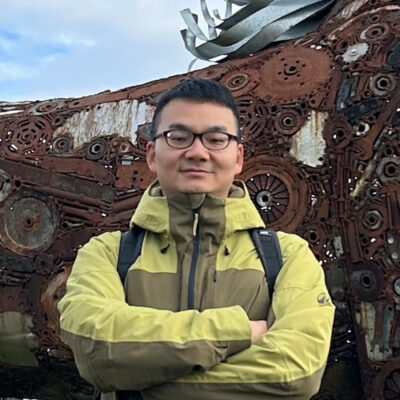
Research Group Leader: Dr. Xiaowei Xu
Institution: ScaDS.AI, Leipzig University
Overview
Modern machine learning has achieved remarkable success across a wide range of applications. However, many existing approaches rely heavily on large-scale data and computational resources while insufficiently exploiting the underlying structures of the problems they address.
The Structure-Aware Machine Learning research group investigates how spatial, temporal, population-level, and distributional structures can be incorporated into machine learning as inductive biases to improve scalability, robustness, generalization, and interpretability. Our research focuses on developing generalizable machine learning methods, with applications in computer vision, medical artificial intelligence, and other data-intensive scientific domains.
Research Goals
Our overarching goal is to establish structure-aware learning principles that enable machine learning models to better represent, understand, and generalize from complex data. The group focuses on four interconnected research directions:
- Spatial and Object Structures: Learning representations that capture spatial organization, geometric relationships, and structural dependencies among objects and their components.
- Temporal and Process Structures: Modeling dynamic relationships and temporal dependencies to improve learning from videos, longitudinal observations, and evolving processes.
- Population and Distributional Structures: Exploiting relationships across samples and populations to improve generalization under distribution shifts, data heterogeneity, and limited annotations.
- Structured Representations: Designing representations and learning mechanisms that integrate structural inductive biases to improve efficiency, robustness, and interpretability.
Key Challenges
Despite advances in machine learning, several fundamental challenges remain:
- Learning from limited or imperfect data: Many scientific and real-world applications lack large, consistently annotated datasets.
- Generalization across environments: Models often exhibit degraded performance when applied to new populations, domains, or acquisition conditions.
- Structural consistency: Conventional learning approaches may fail to preserve important spatial, temporal, and relational constraints.
- Scalability and efficiency: Incorporating complex structural information should not impose prohibitive computational costs.
- Interpretability and reliability: Understanding how models use structural information is important for developing trustworthy AI systems.
Outlook and Future Research Directions
The group aims to develop unified and scalable approaches to structure-aware representation learning across different data modalities and problem settings. Future research will explore structure-guided learning under limited supervision, generalization across heterogeneous environments, and efficient modeling of complex spatial and temporal dependencies. Medical AI provides an important application domain, where anatomical structures, physiological processes, and population variability offer opportunities to investigate and validate new machine learning methods. Through collaboration across ScaDS.AI and other research institutions, the group seeks to connect fundamental machine learning research with challenging real-world applications.
Selected Publications of the Group Leader
Y. Zhu and X. Xu*. Decoupled Single-Mask Annotation Noise Detection via Cross-Sectional Patch Self-Consistency. MICCAI, 2026. (Oral Presentation)
J. Qiao, J. Chen, and X. Xu*. MiNQVIS: Mitigating Noisy Queries for Robust Online Video Instance Segmentation. ECCV, 2026.
S. Song et al., including X. Xu*. Domain Knowledge based Comprehensive Segmentation of Type-A Aortic Dissection with Clinically-oriented Evaluation. Medical Image Analysis, 2025.
J. Zhang et al., including X. Xu*. HCM-Net: Structure-aware Excised Myocardium Segmentation Network for the Surgical Planning of Hypertrophic Cardiomyopathy. Expert Systems with Applications, 2023.
J. Yang, X. Xu*, and X. Li*. CardiacNet: Learning to Reconstruct Abnormalities for Cardiac Disease Assessment from Echocardiogram Videos. ECCV, 2024.
J. Yang, X. Ding, Z. Zheng, X. Xu*, and X. Li*. GraphEcho: Graph-Driven Unsupervised Domain Adaptation for Echocardiogram Video Segmentation. ICCV, 2023. (Oral Presentation)
S. Li, X. Li*, X. Xu*, and K.-T. Cheng. Dynamic Subcluster-Aware Network for Few-Shot Skin Disease Classification. IEEE Transactions on Neural Networks and Learning Systems, 2023.
X. Xu et al. A Clinically Applicable AI System for Diagnosis of Congenital Heart Diseases based on Computed Tomography Images. Medical Image Analysis, 2023.
X. Xu et al. Quantization of Fully Convolutional Networks for Accurate Biomedical Image Segmentation. CVPR, 2018.
X. Xu, Y. Ding, S. X. Hu, M. Niemier, J. Cong, Y. Hu, and Y. Shi. Scaling for Edge Inference of Deep Neural Networks. Nature Electronics, 2018.
Team
Group Leader
Dr. Xiaowei Xu
Team Members
Recruitment of two PhD researchers is planned.
Partners
Research collaborations will be added as they are formally established.




Dresden
ScaDS.AI Dresden/Leipzig
Bürogebäude Strehlener Straße
Strehlener Straße 12, 14
01069 Dresden
Center for Interdisciplinary Digital Sciences (CIDS)
ScaDS.AI Dresden/Leipzig
01062 Dresden
Leipzig
Löhrs Carré
Humboldtstraße 25, Uferstr. 11
04105 Leipzig
Data Science Center ScaDS.AI Leipzig
Internes Postfach: 322001
04081 Leipzig
Quicklinks:
Copyright 2026 © SCADS.AI Dresden/Leipzig – All rights reserved.