

Exercise of Power and Control in the Age of Smart Homes and AI
Title: Exercise of Power and Control in the Age of Smart Homes and AI. Perspectives on Gender-Based Violence from Academia and Professional Counseling.
Date: November 26, 2026, 1:00 PM – 2:30 PM
Format: Digital Lunch Talk
Location: Online (Zoom)
Registration: pandu@tu-dresden.de
The topic of digital violence against FLINTA* is certainly not new. It is, nevertheless, gaining increasing relevance in social, academic, and political debates and must be viewed as a cross-cutting issue. On November 25, 2021, a panel discussion was held at TU Dresden under the title “Rollback Through the Web? Recognizing and Addressing Digital Gender-Based Violence”. Dr. Jutta Luise Eckhardt, the Chief Equal Opportunity Officer at TU Dresden, led the discussion with guests from academia, politics, and the field. We aim to build on key aspects of that debate.
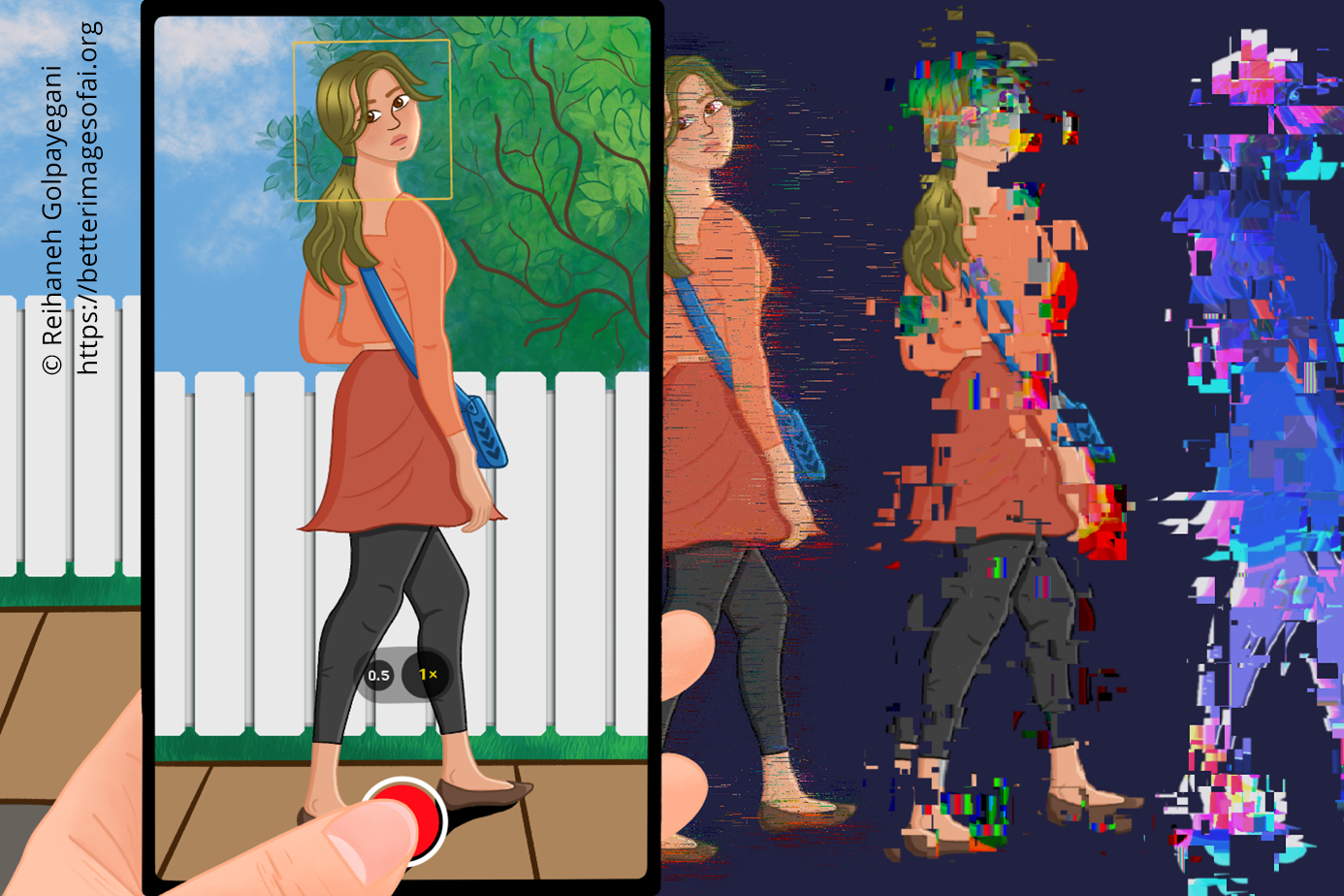
Looking Back: Key Questions and Insights from 2021
The 2021 event focused on clarifying the forms of digital violence (hate speech vs. digital violence in close-knit social circles) and the associated experiences, as well as the impacts. Central questions included:
- What impact does digitalization have on participation (digital gender gap)?
- Who should be held accountable here?
What was striking at the time was the lack of awareness regarding digital gender-based violence:
“To date, digital gender-based violence remains largely unknown. Terms describing forms of this violence, such as doxing, swatting, sexting, or cyberharassment, do little to raise awareness. Similarly, hardly anyone associates passwords, routers, or smart-home technology with violence against women and queer people.”
Present context: Collien Fernandes and the LeSuBiA study
Digital violence takes many forms and penetrates deeply into personal spheres of life. One example is the story of Collien Fernandes. Many FLINTA* people recognize themselves and their own experiences in her story of violence. The two-part ZDF documentary “Die Spur: Deepfake-Pornos” from 2024 addresses many of the phenomena of violence mentioned above.
In 2026, the first part of the LeSuBiA “Dark Field” study, “Lebenssituation, Sicherheit und Belastung im Alltag,” was published. This study was carried out through a collaboration between the Federal Ministry of Education, Family, Seniors, Women, and Youth, the Federal Ministry of the Interior, and the Federal Criminal Police Office. It addresses the topic of digital violence in a separate chapter.
Here, “digital violence in the narrow sense (i.e.S.) (…) refers to actions that are possible exclusively on the Internet or through the use of digital media, such as image manipulation or fake profiles used for defamation, or the misuse of smart-home devices. In addition to these forms of violence, which are now classically referred to as digital violence, LeSuBiA also surveyed previously lesser-known forms of violence, such as violence against avatars in online games.”
Digital Violence and Cybersecurity: Responsibility and Solutions
The findings of the LeSuBiA study confirm what many survivors already know. Digital violence is closely linked to issues of cybersecurity. This topic has been addressed by tech journalist Eva Wolfangel for years in her articles, podcasts, and lectures. She has anchored the topic of cybersecurity within the public discourse. In a keynote speech on IT security, she put it succinctly and provocatively:
“The problem isn’t sitting in front of the screen – it’s in the system.”
When it comes to smart homes and AI technologies, it becomes clear that digital violence does not only take place in digital spheres. It also permeates our everyday lives and thus our physical reality. (Kieron) Ivy Turk and Alice Hutchings write in “Spy-oT: Understanding How Users Learn to Use Internet of Things Devices For Abusive Purposes” about “Technology-Facilitated Domestic Abuse.”
Users often have only limited insight into how smart devices work, the algorithms underlying them, and the data that is used, collected, and processed in the process. This creates dependencies and power structures. Particularly with regard to everyday objects such as smartphones, there is also a great need for education and training on safe usage in the context of gender-based violence. Overall, the potential for abuse of power must be considered much more carefully in the future, both in the development of smart devices and in the assessment and evaluation of cybersecurity.
Schedule, Speakers & Presentations
As part of the International Day for the Elimination of Violence against Women, which raises awareness of gender-based violence every year on November 25, the Complaint Office in cases of discrimination harassment, violence at the Technical University of Dresden is organizing a series of events in 2026 for the sixth consecutive year.
On November 26, 2026, we invite you to join us in a discussion with leading experts on the topic of digital violence in the age of AI and smart homes. Together, we will explore the technical and societal solutions needed to effectively combat digital violence. We will also look into how prevention and protective measures can be further developed.
Speakers
Michaela Burkard
Michaela Burkard is a project coordinator for the “bff: aktiv gegen digitale Gewalt” (bff: Active Against Digital Violence) project within the “Bundesverband Frauenberatungsstellen und Frauennotrufe” (Federal Association of Women’s Counseling Centers and Women’s Hotlines). The Federal Association strengthens support for victims of digital violence by providing:
- training,
- informational materials, and
- networking opportunities for social workers.
Victor Jüttner
Victor Jüttner is a doctoral candidate and research assistant at ScaDS.AI Dresden/Leipzig in Leipzig. His research focuses on cybersecurity solutions for the smart home. He works on detecting cyberattacks by analyzing network traffic, developing communication strategies that enable smart home users – regardless of their technical background – to protect their systems, and developing methods for identifying human activities in smart homes based on network data.
Dr. Katrin Etzrodt
Dr. Katrin Etzrodt is senior research and teaching associate at the Institute for Media and Communication at TU Dresden. Her research centers on human-machine communication, with a particular focus on how voice assistants are perceived as social actors. Since 2017, she has been part of the Humans in the Internet of Things (HIT) and Smart Home Lab at TU Dresden, a project exploring the implications of emerging technologies such as the Internet of Things and smart home applications. Her research, publications, and teaching focus primarily on these new technologies.
Vanessa Kuhfs
Vanessa Kuhfs will moderate the event. She conducts research in the fields of design research, feminist AI, and science communication on topics such as technology, media, and AI. She has played a key role in shaping the event’s content through numerous conversations, discussions, and reflections.
Outlook
We look forward to your participation and to a lively discussion together!



Dresden
ScaDS.AI Dresden/Leipzig
Bürogebäude Strehlener Straße
Strehlener Straße 12, 14
01069 Dresden
Zentrum für Informationsdienste und Hochleistungsrechnen
ScaDS.AI Dresden/Leipzig
01062 Dresden
Leipzig
Löhrs Carré
Humboldtstraße 25, Uferstr. 11
04105 Leipzig
Data Science Center ScaDS.AI Leipzig
Internes Postfach: 322001
04081 Leipzig
Quicklinks:
Copyright 2026 © SCADS.AI Dresden/Leipzig – All rights reserved.