February 20, 2025
Reasoning Models and AI-Assisted Programming: A Recap of the Latest ScaDS.AI Meetup
ScaDS.AI Dresden/Leipzig
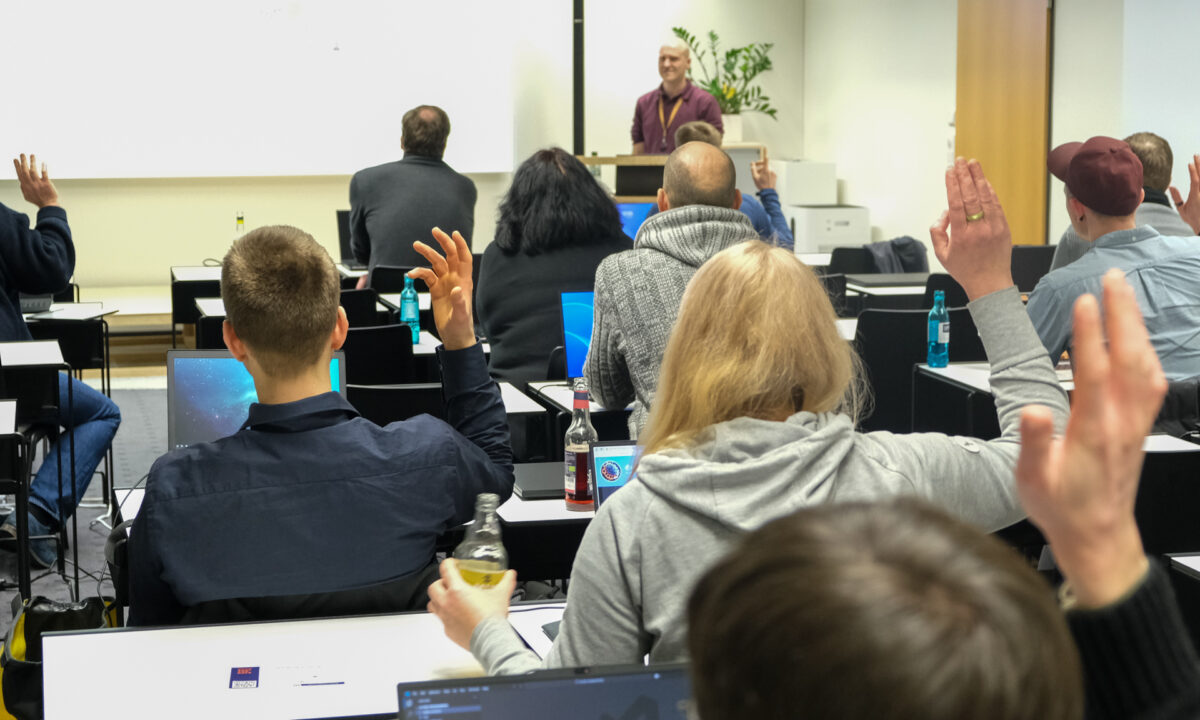
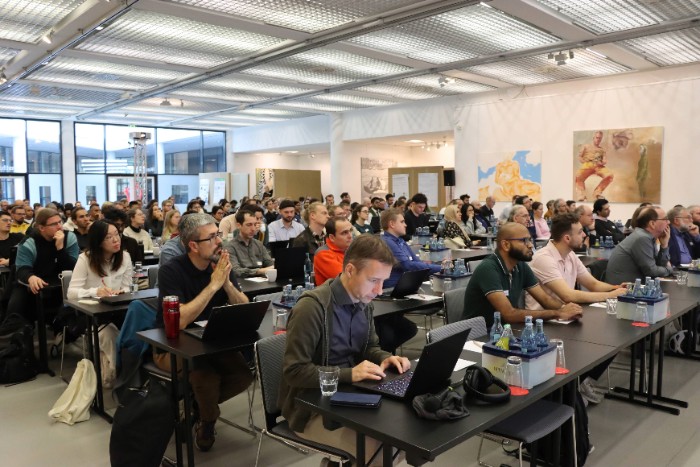
The Meetup event series continued yesterday for the first time in the new year with a new interactive workshop format. In addition to exciting insights into new reasoning models and a workshop on programming with artificial intelligence, the attendees from academia and industry also had plenty of time to talk and exchange ideas.
Unlocking AI Reasoning: New Models, Prompts and Transparency
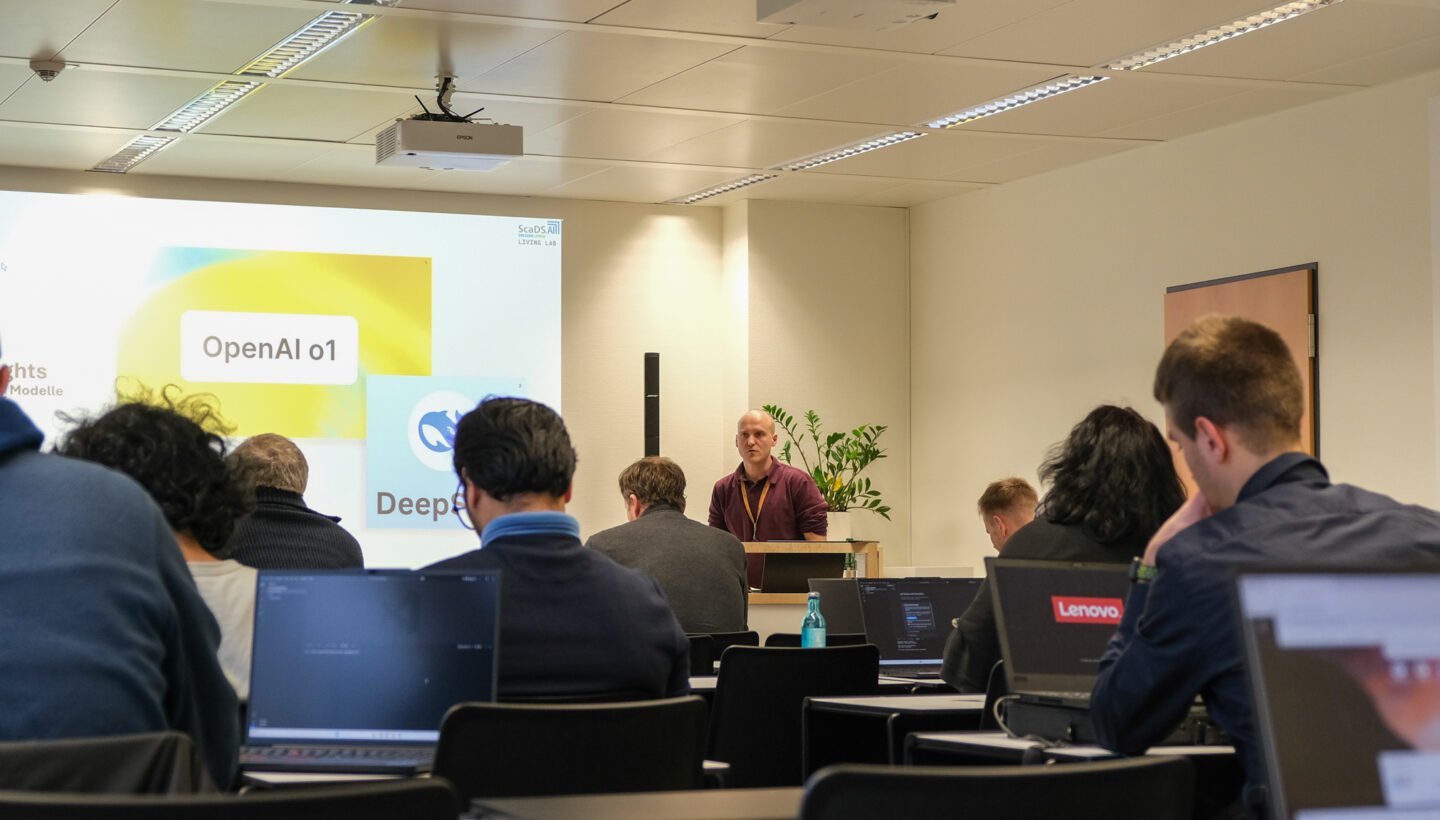
The first part of the event, AI Insights, was a presentation of reasoning models. Traditional GPT models such as ChatGPT are capable of answering a wide range of questions. However, the new reasoning models, such as those used in OpenAI o1 or DeepSeek, are better suited to complex tasks that require a high degree of accuracy and reliability. They perform an internal monologue and generate an internal causal chain. What was achieved with conventional GPT models through the input of the so-called “Cain of Thought Prompting” is now taken over by the new reasoning models themselves. In addition, a transparency of the thought process is achieved.
Reasoning models are trained to think longer and more intensively about complex tasks. They are very well suited to developing strategies, planning solutions to complex problems and making decisions based on large amounts of ambiguous information. They are characterized by high accuracy and precision. (OpenAI: https://platform.openai.com/docs/guides/reasoning-best-practices)
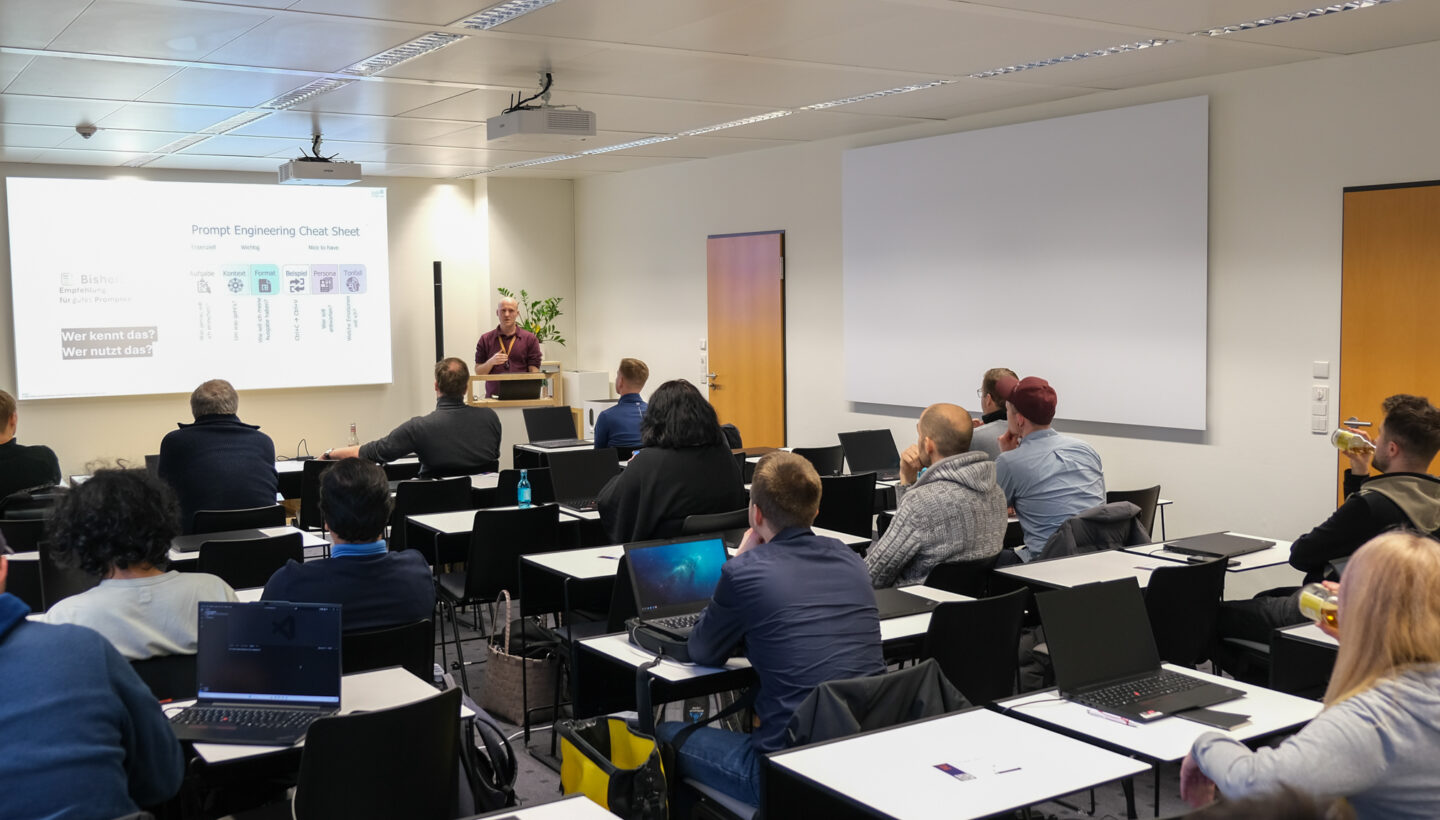
The prompts also differ from the previous GPT models. The new reasoning models have the ability to think for themselves, which means that the input of examples or a step-by-step instruction is no longer necessary. Instead, a precise and compact input that clearly defines the individual sections of the query is recommended. Boundary signals help the model to recognize and correctly interpret the sections. In addition, clear instructions on the result are important, i.e. success criteria for an answer to be evaluated as successful.

Hands-On with AI Coding
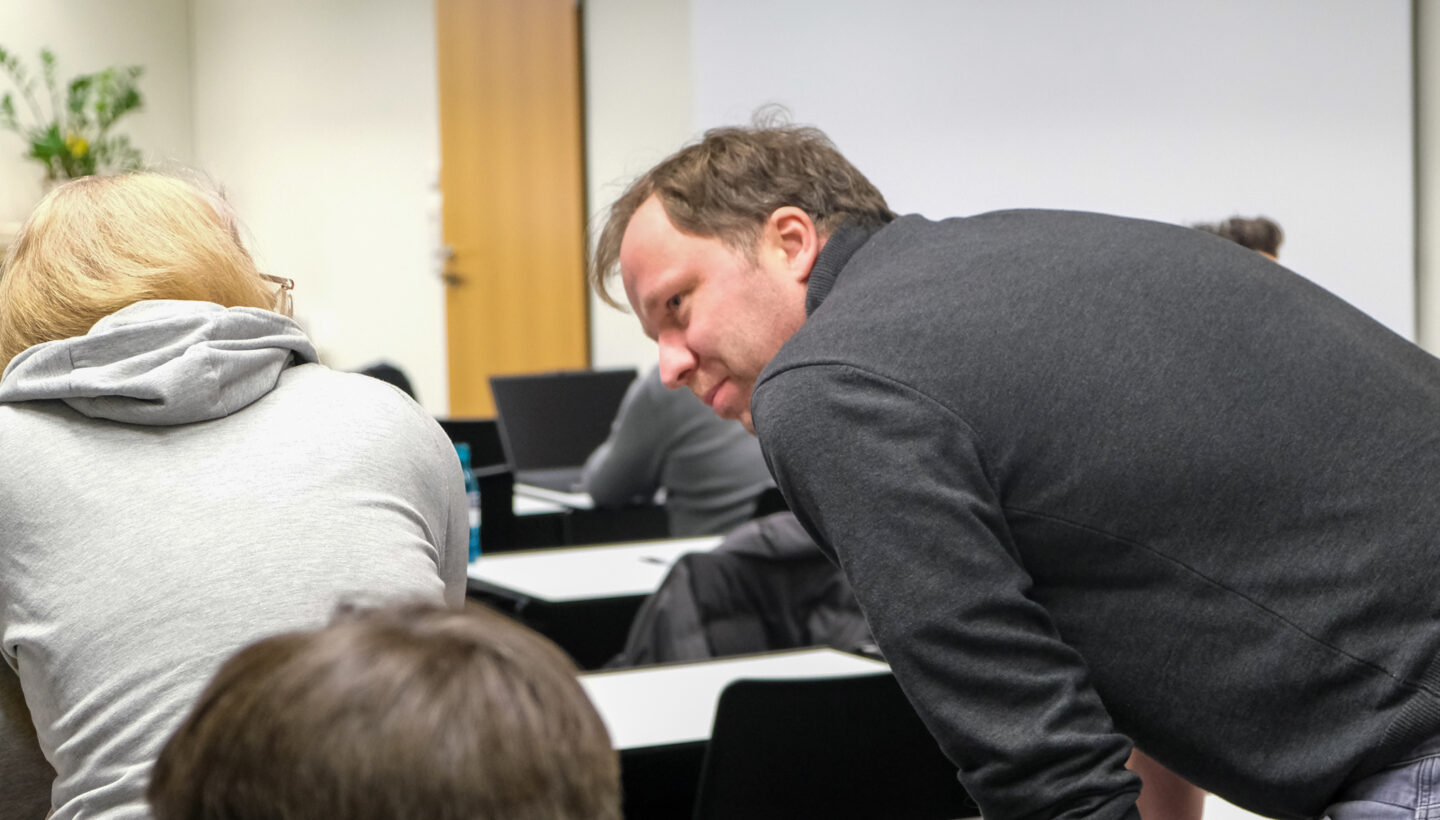
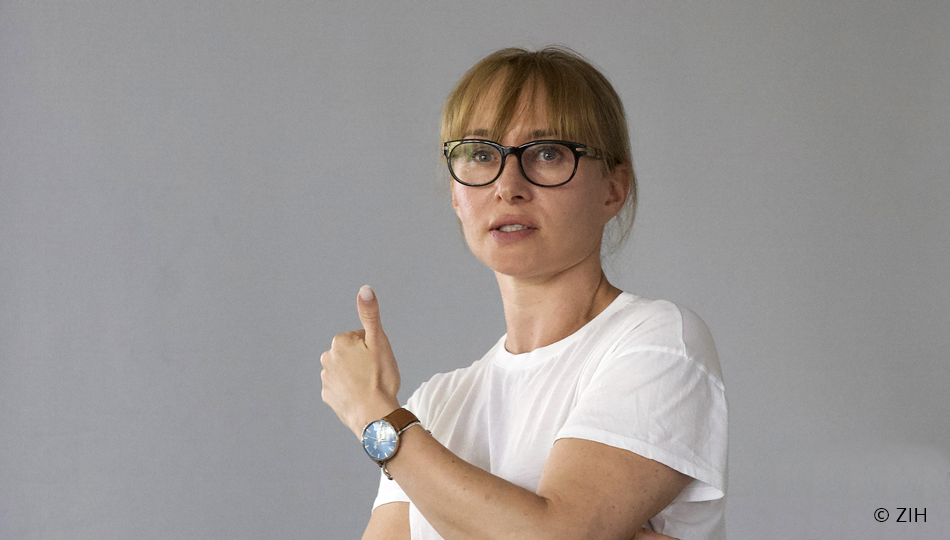
The second part of the course was an excursion into the world of programming with AI, led by Oliver Welz. AI coding agents, which autonomously solve programming tasks based on text input, are an essential part of programming with AI. For this purpose, these agents are using so-called tool- or function calling, i.e. their own tools. They enable them to make changes to the file system, among other things, to perform complex behavior. Through clever prompting and because the AI assistant has the codebase in context, certain programming tasks can be (partially) automated. This can not only offer added value in terms of performance when programming, but also opens up possibilities if you want to learn programming. Together with the AI assistant, you can also hold conversations about the code at any time, which could, for example, improve basic understanding and access to programming.
Continue the Conversation: Join Us at the Next Meetup!
Following the presentations, the ScaDS.AI Living Lab offered the opportunity to exchange ideas and make new contacts over cold drinks. Anyone interested in presenting their own AI project or a complex problem in their company at the next meetup, please contact Oliver Welz.

funded by:


ScaDS.AI Dresden/Leipzig (Center for Scalable Data Analytics and Artificial Intelligence) is a center for Data Science, Artificial Intelligence and Big Data with locations in Dresden and Leipzig.


Dresden
Visitor address
Technische Universität Dresden
ScaDS.AI Dresden/Leipzig
Bürogebäude Strehlener Straße
Strehlener Straße 12, 14
01069 Dresden
ScaDS.AI Dresden/Leipzig
Bürogebäude Strehlener Straße
Strehlener Straße 12, 14
01069 Dresden
Postal address
Technische Universität Dresden
Zentrum für Informationsdienste und Hochleistungsrechnen
ScaDS.AI Dresden/Leipzig
01062 Dresden
Zentrum für Informationsdienste und Hochleistungsrechnen
ScaDS.AI Dresden/Leipzig
01062 Dresden
Leipzig
Visitor address
ScaDS.AI Dresden/Leipzig
Löhrs Carré
Humboldtstraße 25, Uferstr. 11
04105 Leipzig
Löhrs Carré
Humboldtstraße 25, Uferstr. 11
04105 Leipzig
Postal address
Universität Leipzig
Data Science Center ScaDS.AI Leipzig
Internes Postfach: 322001
04081 Leipzig
Data Science Center ScaDS.AI Leipzig
Internes Postfach: 322001
04081 Leipzig
Quicklinks:
Copyright 2026 © SCADS.AI Dresden/Leipzig – All rights reserved.