September 25, 2026
General Assembly 2026 in Dresden
ScaDS.AI Dresden/Leipzig
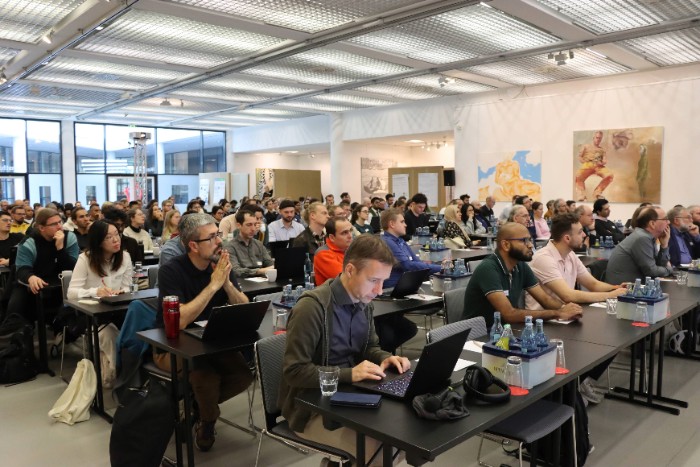
On September 22–23, more than 150 members of ScaDS.AI Dresden/Leipzig came together in Dresden for the second General Assembly 2026. Over two days, the program brought together researchers and colleagues from across the center for talks, workshops, breakout sessions and a poster session. It once again provided opportunities to exchange ideas, discuss current research and strengthen collaboration.
Research Talks and Keynote on Human-AI Teams
The first day began with welcoming remakrs from the center directors Prof. Gerik Scheuermann, Prof. Jens Meiler and Prof. Wolfgang E. Nagel. Afterwards, participants received updates on news, transfer and services at ScaDS.AI Dresden/Leipzig.
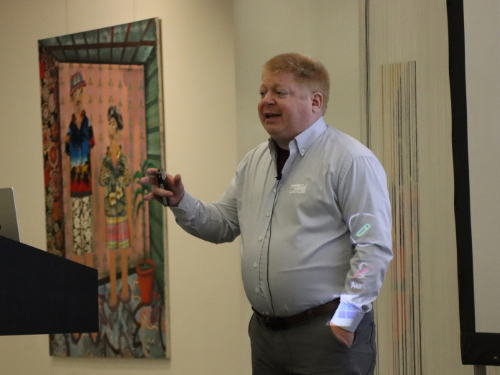
A highlight of the morning was the keynote by Prof. Matthew E. Taylor from the University of Alberta, Canada, titled “Learning Well With Others: From Agent-Agent Advising to Human-AI Teams.” His talk explored how intelligent agents can learn from external knowledge and advice. He also demonstrated how these ideas can be applied to the interaction between humans and AI systems.
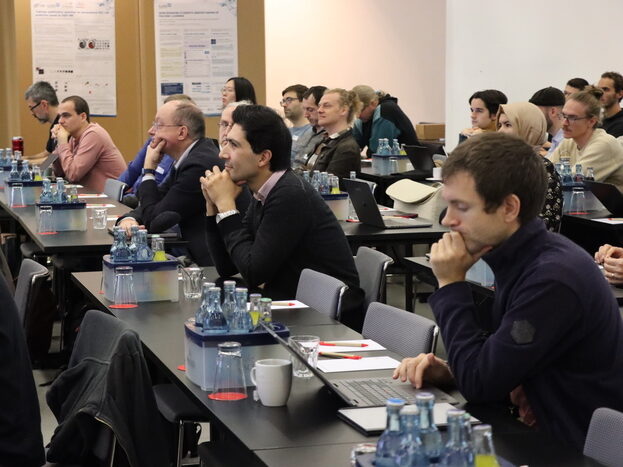
The scientific program then continued with several research talks. Topics included AI and mathematical structure discovery, multi-perspective knowledge management, multiscale liver disease models and digital participation in smart cities.
Later in the afternoon, further presentations focused on explainable and responsible AI in protein design. Other talks covered energy-aware benchmarking of generative information extraction and the use of genomic language models and multi-omic AI.
Poster Session and Best Poster Award
The afternoon also featured a poster session. Researchers presented their work, discussed their projects and exchanged ideas with colleagues from across the center.
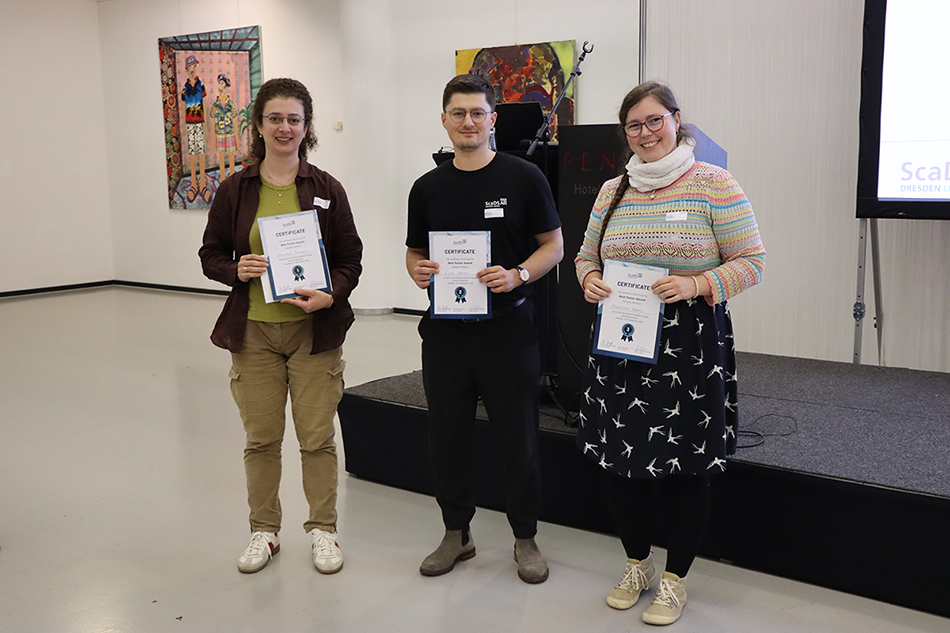
As part of the session, participants were invited to vote for their favorite posters by placing a sticker on the poster of their choice. The session concluded with the presentation of the Best Poster Award, which recognized the three posters that received the most votes.
This year’s award recipients were Chrakhan Barzanji, Elias Werner and Franziska Kahlert.
Congratulations to all three winners!
Workshops and Breakout Sessions
The second day focused on interactive workshops and breakout sessions. Participants were able to choose between several parallel formats covering different areas of AI research and practice.
The “Math Foundations” breakout highlighted current ScaDS.AI Dresden/Leipzig projects incorporating mathematical theory. A workshop on “Daily AI at ScaDS.AI” provided a space to exchange experiences and best practices for using AI in everyday research tasks such as literature research, brainstorming, data analysis, coding and writing.
“Resilient AI: Securing LLMs,” explored common attack scenarios for LLM-based systems and approaches for making these systems more robust. Subsequent sessions focused on educational technology in the age of AI, as well as design-based research for the development of EdTech.
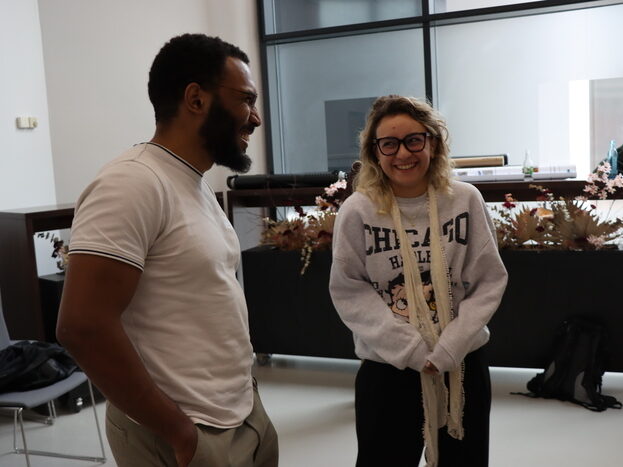
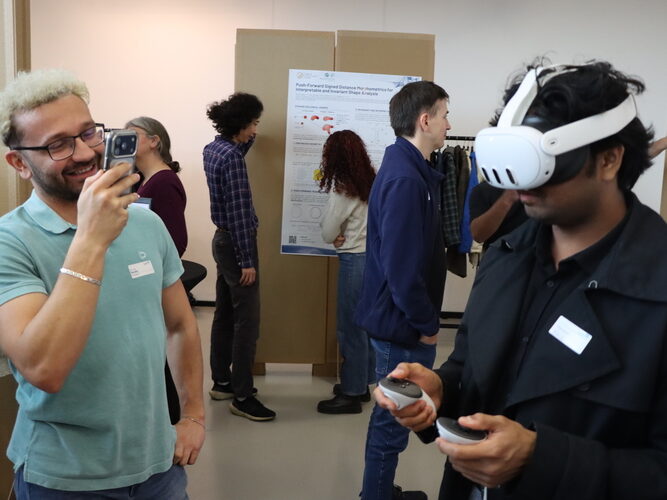
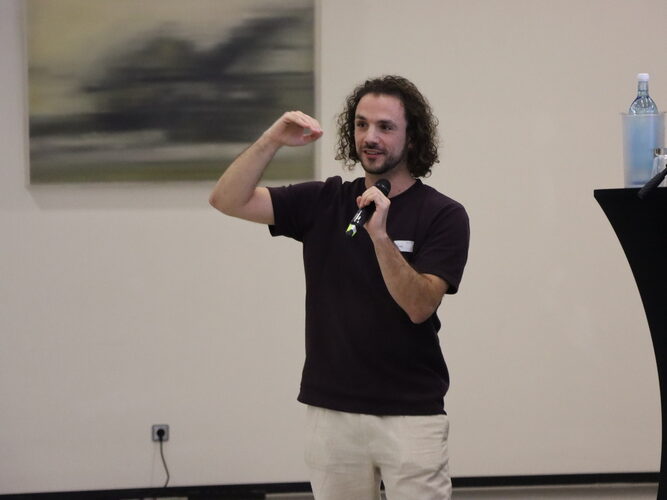
This General Assembly once again provided an opportunity for members from Dresden and Leipzig to meet in person, learn about research across the center and exchange ideas beyond individual projects and research groups. Thank you to everyone who contributed to the program and made the General Assembly 2026 a successful two days in Dresden.
funded by:

ScaDS.AI Dresden/Leipzig (Center for Scalable Data Analytics and Artificial Intelligence) is a center for Data Science, Artificial Intelligence and Big Data with locations in Dresden and Leipzig.


Dresden
Visitor address
Technische Universität Dresden
ScaDS.AI Dresden/Leipzig
Bürogebäude Strehlener Straße
Strehlener Straße 12, 14
01069 Dresden
ScaDS.AI Dresden/Leipzig
Bürogebäude Strehlener Straße
Strehlener Straße 12, 14
01069 Dresden
Postal address
Technische Universität Dresden
Zentrum für Informationsdienste und Hochleistungsrechnen
ScaDS.AI Dresden/Leipzig
01062 Dresden
Zentrum für Informationsdienste und Hochleistungsrechnen
ScaDS.AI Dresden/Leipzig
01062 Dresden
Leipzig
Visitor address
ScaDS.AI Dresden/Leipzig
Löhrs Carré
Humboldtstraße 25, Uferstr. 11
04105 Leipzig
Löhrs Carré
Humboldtstraße 25, Uferstr. 11
04105 Leipzig
Postal address
Universität Leipzig
Data Science Center ScaDS.AI Leipzig
Internes Postfach: 322001
04081 Leipzig
Data Science Center ScaDS.AI Leipzig
Internes Postfach: 322001
04081 Leipzig
Quicklinks:
Copyright 2026 © SCADS.AI Dresden/Leipzig – All rights reserved.