January 22, 2026
About the Irrationality in the Relationship Between Humans and AI
Research
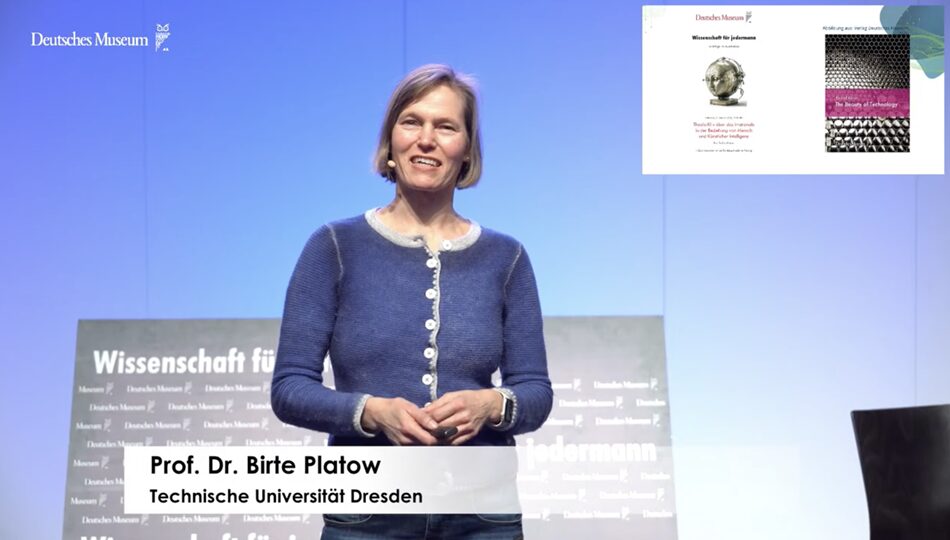
On January 21, 2026, Prof. Birte Platow and Prof. Martin Potthast gave a talk at Deutsches Museum in Munich about the complex relationship between humans and AI. While AI appears rational, our relationship with it is shaped by imagination and emotion – making it more irrational than we might suspect.
Humans and AI: Interaction on a (non-)rational level
In her talk, Prof. Birte Platow mentioned that encountering and working with AI often leads people to the impression that this technology is rationally determined. After all, it is based on data, models, analyses, statistics, and probabilities. However, we overlook the fact that, in addition to this technical side, there is another, largely invisible aspect that shapes the collaboration between humans and AI: human imagination and our ability to form invisible relationships with other humans, animals, and even technology.
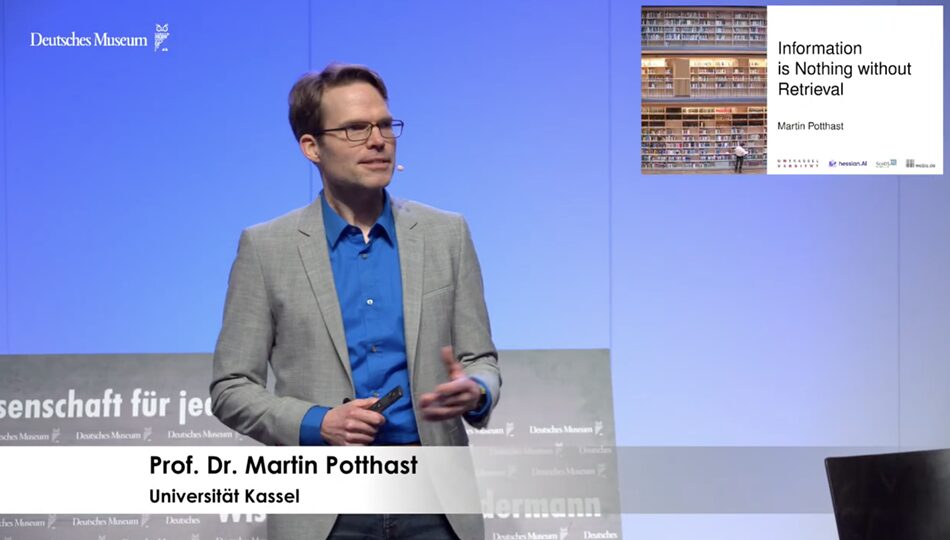
Prof. Martin Potthast continued with a commentary on information retrieval. Solving new problems, completing tasks, and satisfying our curiosity regularly pushes humanity to the limits of our knowledge. To move forward, we need information that supplements our knowledge, refreshes what we have forgotten, dispels uncertainties, and inspires us. Until recently, this required time-consuming research. Recently, language models and generative AI have increasingly replaced this search with direct answers and ready-to-use solutions. The history of information retrieval shows that this is the logical next step in development – but it comes with new challenges.
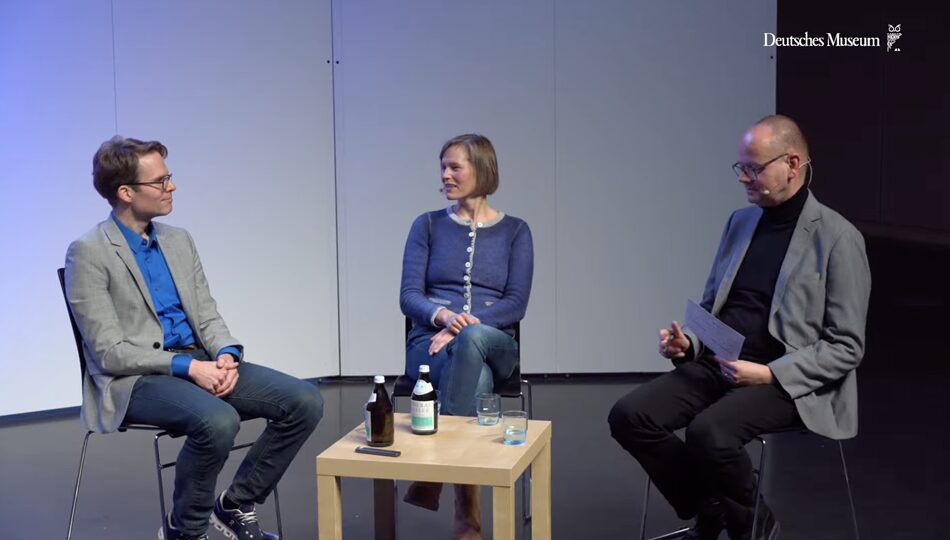
Prof. Birte Platow and Prof. Martin Potthast later discussed exactly those challenges with Dr. Thomas Steinforth (Domberg-Akademie). Which tasks can AI support us with – and which (even tedious) tasks should we continue to tackle ourselves for practical or emotional reasons? Can AI really predict the future with just enough data to prepare us for unexpected life events? And do we even want that? How will research an causal AI change our lives? The session was closed with a question-and-answer session with the audience.
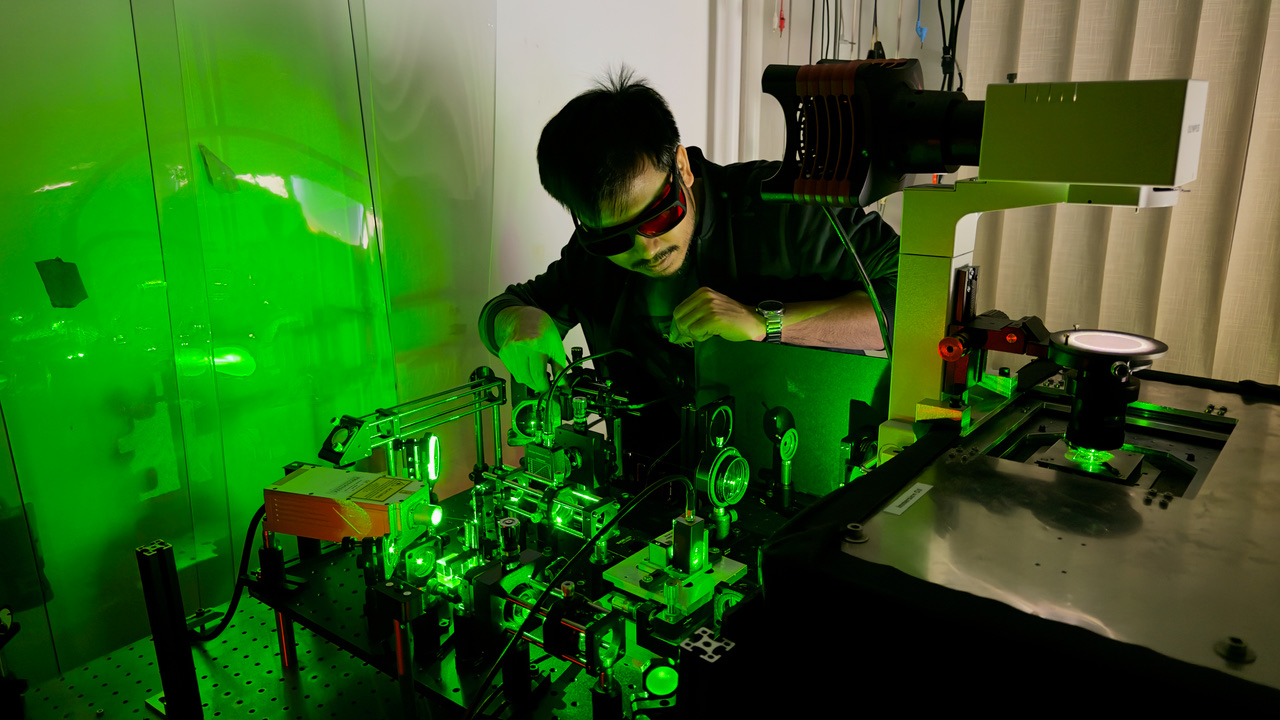
Research on Responsible AI at ScaDS.AI Dresden/Leipzig
Our research area Responsible AI is tackling questions on the complex relationship between humans and AI. Their work focusses on both technological and human factors that arise in the multiple human-machine-interactions of today’s world. The interdisciplinary research team represents ethical, legal, technological, and pedagogical perspectives. Together, they are shaping our understanding of the responsible use of AI in the present and future.

funded by:


ScaDS.AI Dresden/Leipzig (Center for Scalable Data Analytics and Artificial Intelligence) is a center for Data Science, Artificial Intelligence and Big Data with locations in Dresden and Leipzig.


Dresden
Visitor address
Technische Universität Dresden
ScaDS.AI Dresden/Leipzig
Bürogebäude Strehlener Straße
Strehlener Straße 12, 14
01069 Dresden
ScaDS.AI Dresden/Leipzig
Bürogebäude Strehlener Straße
Strehlener Straße 12, 14
01069 Dresden
Postal address
Technische Universität Dresden
Zentrum für Informationsdienste und Hochleistungsrechnen
ScaDS.AI Dresden/Leipzig
01062 Dresden
Zentrum für Informationsdienste und Hochleistungsrechnen
ScaDS.AI Dresden/Leipzig
01062 Dresden
Leipzig
Visitor address
ScaDS.AI Dresden/Leipzig
Löhrs Carré
Humboldtstraße 25, Uferstr. 11
04105 Leipzig
Löhrs Carré
Humboldtstraße 25, Uferstr. 11
04105 Leipzig
Postal address
Universität Leipzig
Data Science Center ScaDS.AI Leipzig
Internes Postfach: 322001
04081 Leipzig
Data Science Center ScaDS.AI Leipzig
Internes Postfach: 322001
04081 Leipzig
Quicklinks:
Copyright 2026 © SCADS.AI Dresden/Leipzig – All rights reserved.