February 6, 2026
An Insight- and Joyful Graduate School Winter Retreat in Görlitz
Events
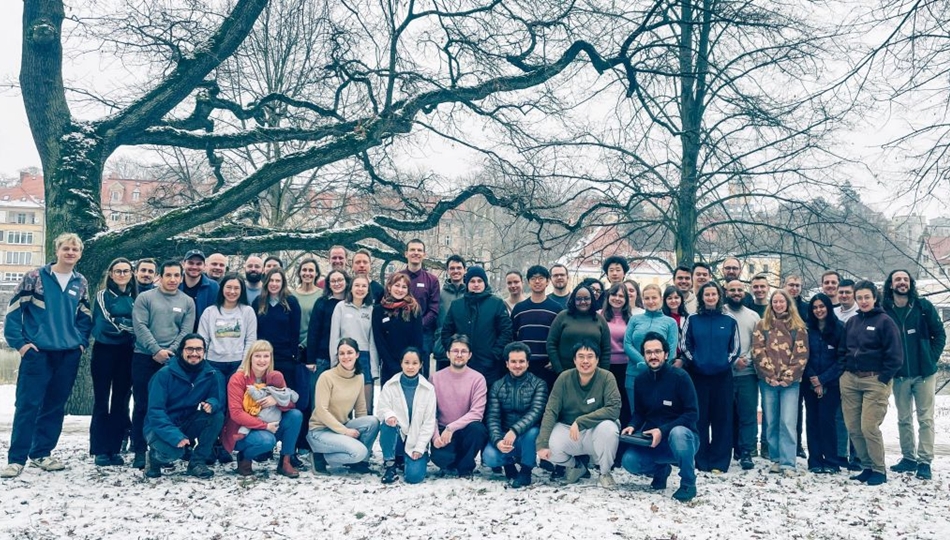
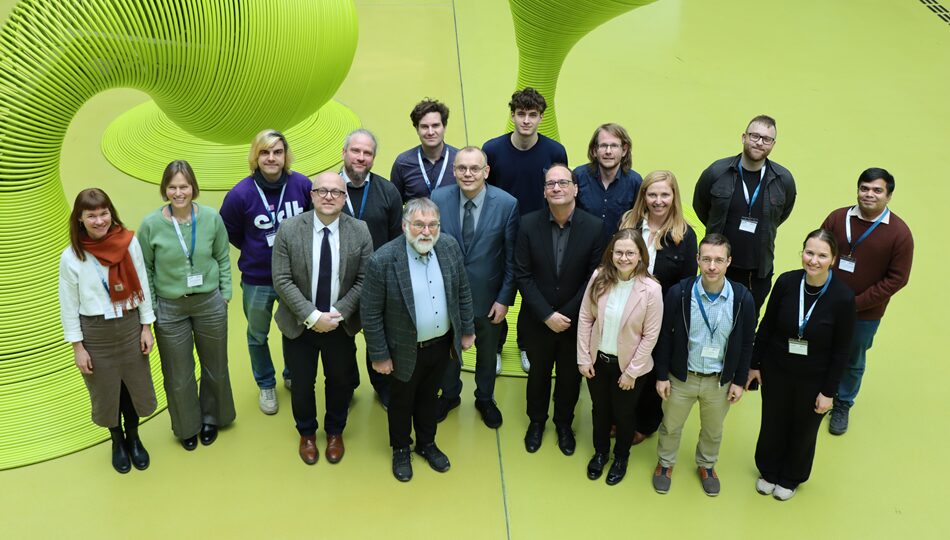
From January 27–30, 2026, the graduate school of ScaDS.AI Dresden/Leipzig once again set off on its annual retreat – the fourth of its kind. This time, the destination was wintry Görlitz, which offered snow, beautiful scenery and plenty of space for scientific exchange. A total of 55 participants from Leipzig and Dresden – many of whom freshly starting into their PhD – came together to take part in a rich scientific and social program, hosted at Parkhotel Görlitz.
Scientific Exchange and Görlitz Perspectives
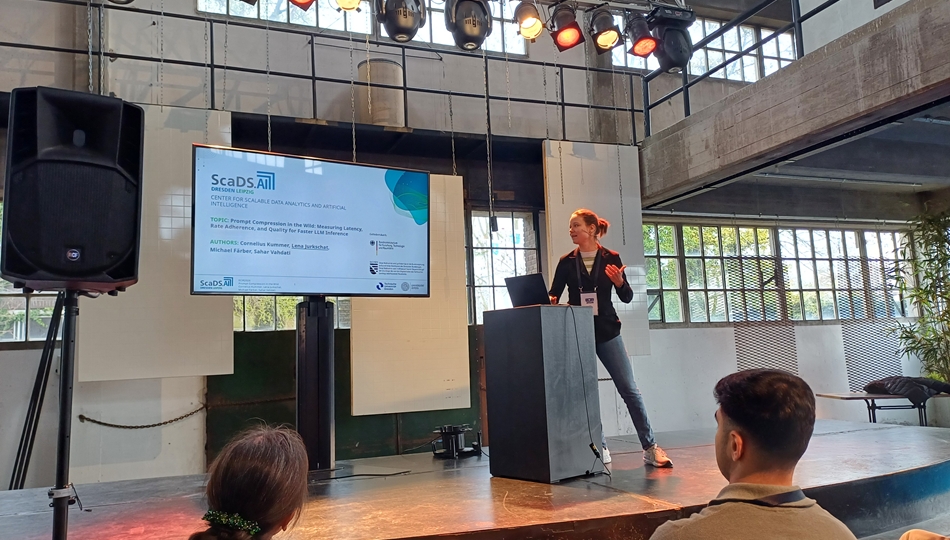
We kicked the retreat off by everyone (except for our youngest attendee, few months of age) presenting their research interests in an elevator pitch, thus establishing starting points for future discussions. In the days that followed, many of the topics were explored in greater depth in scientific talks and in barcamp discussion rounds. Noteworthy examples include discussing experiences on high-performance computing as well as an exchange on neuro-symbolic AI, the latter coincidentally foreshadowing ScaDS.AI Dresden/Leipzig’s 2026 Summer School.
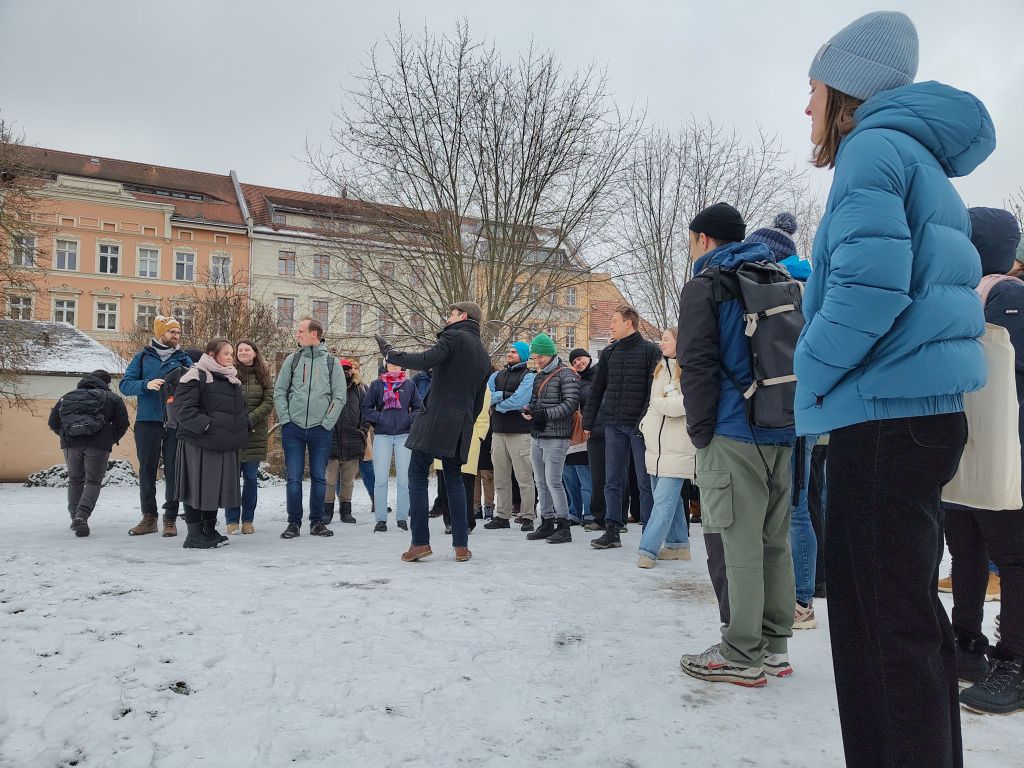
The first key highlight of the retreat was the visit to the headquarters of the Center for Advanced Systems Understanding (CASUS) in Görlitz. Following keynotes by Deputy Director Dr. Michael Bussmann and team leaders Prof. Dr. Michael Hecht and Prof. Dr. Artur Yakimovich, a joint poster session gave doctoral students from both CASUS and ScaDS.AI Dresden/Leipzig the opportunity to engage in direct scientific exchange. New contacts, new ideas and numerous discussions demonstrated how fruitful such encounters between research centers can be. Afterwards, Philipp von Haymerle from CASUS guided us enthrallingly through the historical center of Görlitz and provided insights into the historical and cultural development of the city – including some of the filming locations that have earned Görlitz the (not in-)glorious nickname ‘Görliwood’.
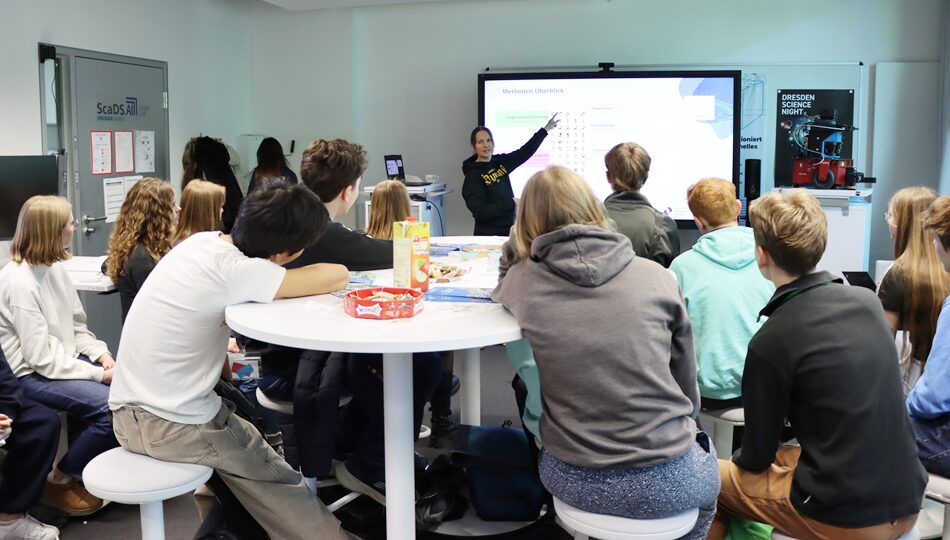
Our program was completed by three tutorials and four training sessions, the latter organized by external trainers, the former by doctoral students. The training sessions focused on academic writing and time management in PhD studies – a topic that, as expected, was met with great interest. In addition to great tutorials on personal knowledge management with Obsidian and on the Typst typesetting system, a version of Monopoly was developed for our retreat with outmost dedication to teach us the basics of research data management – WOW!
Enigmatic and Playful Socializing
It has become a tradition to spend one evening doing a pub quiz – and this one was a blast again! Among others, LLM prompts were reverse engineered and AI-generated songs were listened to. Surely, Writing Block easy will remain high up in at least the Graduate School charts for a while! Likewise as every year, the team consisting of our graduate school coordinators came in last.
A good share of us spent the other evenings together playing games or forming individual sports groups. Those who still had the nerves on the last evening took part in a fairly special kind of city tour – a Gruseltour (spooky tour) through Görlitz.
Thankfully Looking Forward!
We returned from Görlitz with lots of new ideas, fresh energy and great memories. Once again, the retreat showed how much we gain from taking time for exchange beyond our daily routines. All contributors and, indeed, the overall crowd of all attendees deserves heartfelt thanks! Where the next retreat will take us may still be a mystery – but it’s clearly just around a year away until we can get together again in this splendid setting.
funded by:

ScaDS.AI Dresden/Leipzig (Center for Scalable Data Analytics and Artificial Intelligence) is a center for Data Science, Artificial Intelligence and Big Data with locations in Dresden and Leipzig.


Dresden
Visitor address
Technische Universität Dresden
ScaDS.AI Dresden/Leipzig
Bürogebäude Strehlener Straße
Strehlener Straße 12, 14
01069 Dresden
ScaDS.AI Dresden/Leipzig
Bürogebäude Strehlener Straße
Strehlener Straße 12, 14
01069 Dresden
Postal address
Technische Universität Dresden
Zentrum für Informationsdienste und Hochleistungsrechnen
ScaDS.AI Dresden/Leipzig
01062 Dresden
Zentrum für Informationsdienste und Hochleistungsrechnen
ScaDS.AI Dresden/Leipzig
01062 Dresden
Leipzig
Visitor address
ScaDS.AI Dresden/Leipzig
Löhrs Carré
Humboldtstraße 25, Uferstr. 11
04105 Leipzig
Löhrs Carré
Humboldtstraße 25, Uferstr. 11
04105 Leipzig
Postal address
Universität Leipzig
Data Science Center ScaDS.AI Leipzig
Internes Postfach: 322001
04081 Leipzig
Data Science Center ScaDS.AI Leipzig
Internes Postfach: 322001
04081 Leipzig
Quicklinks:
Copyright 2026 © SCADS.AI Dresden/Leipzig – All rights reserved.