November 6, 2026
From Bengaluru to Delhi: Prof. Michael Färber’s Research Visit to India
Research
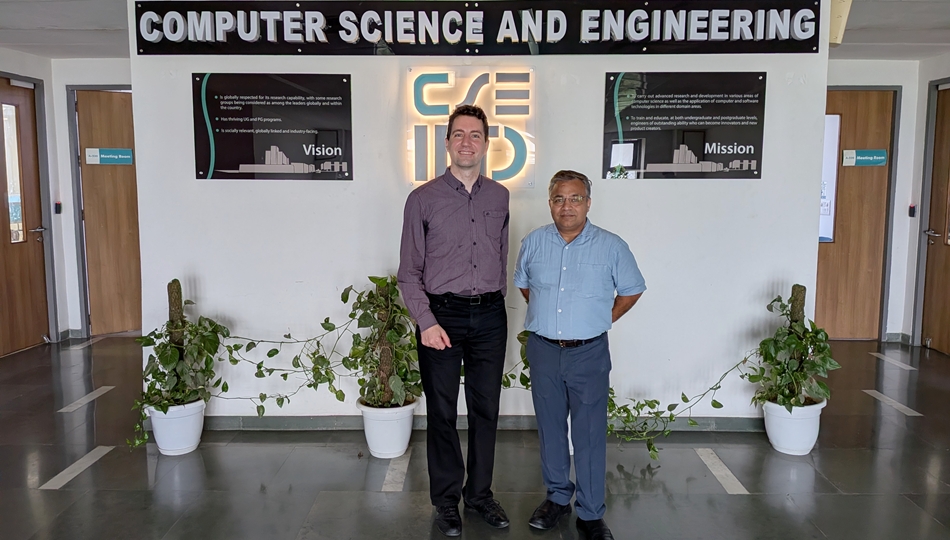
In late August and early September 2026, Prof. Michael Färber completed a research visit to India. He spent about a week in Bengaluru and Delhi. During his stay, he gave talks at Microsoft Research India, the Indian Institute of Science (IISc), the Indraprastha Institute of Information Technology Delhi (IIIT Delhi), and the Indian Institute Of Technology Delhi (IIT Delhi). He also joined an Indo-German workshop on Green AI for healthcare at IIT Delhi. The aim was to share his group’s work on trustworthy AI for science and to build closer ties with research groups in India.
Bengaluru
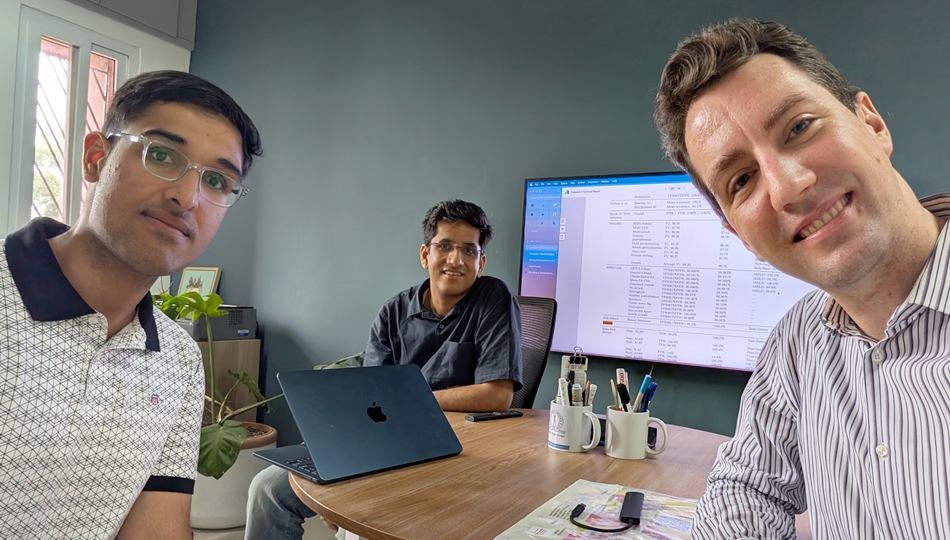
The trip started on August 31, 2026 at Microsoft Research India, where Dr. Sourabrata Mukherjee hosted him for a talk. It led to good discussions with the lab’s researchers and research fellows. Furthermore, he met people from other groups at the lab.
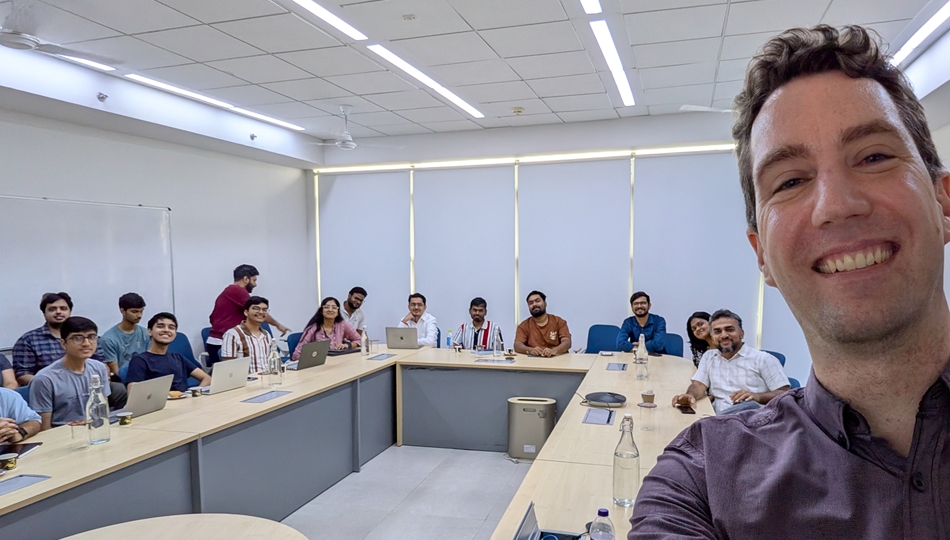
At IISc, he met Dr. Danish Pruthi and his PhD student Kinsuk. On September 1, he gave a department seminar at the Department of Computational and Data Sciences (CDS), hosted by Dr. Pruthi. Afterwards, he spent time with students, answering their questions and hearing about their research.
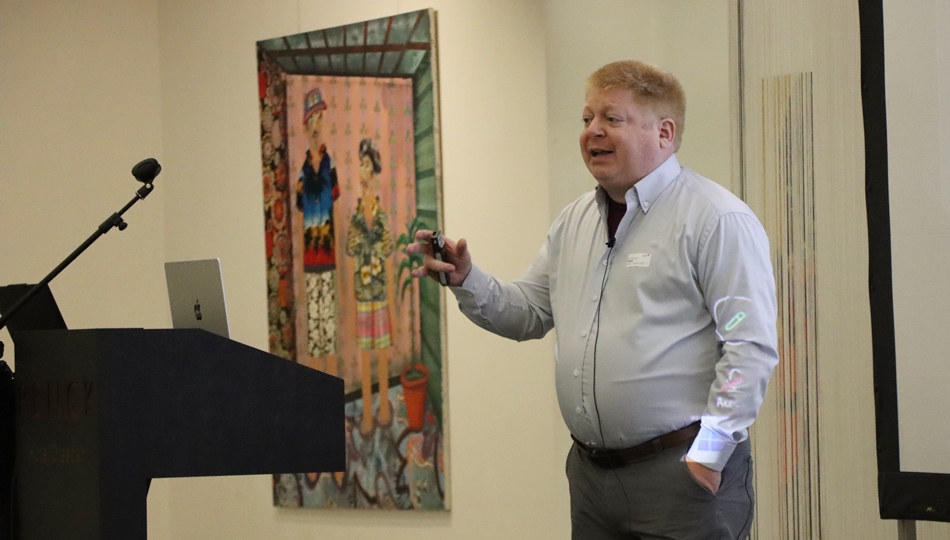
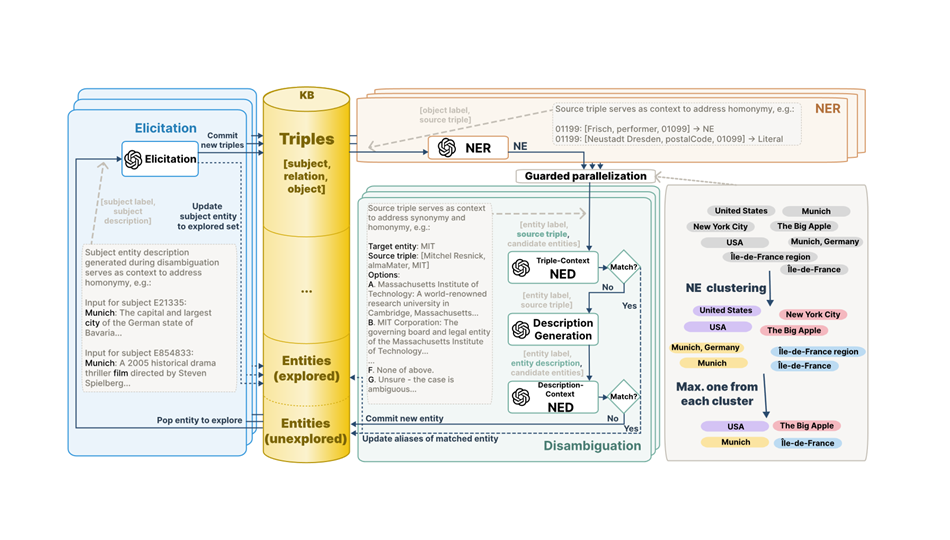
His talk, “From Papers to Insights with LLMs and Knowledge Graphs”, started from a problem every researcher knows. Far more papers are published than anyone can read. The hard part today is turning them into insights you can trust and check. He showed how large language models and knowledge graphs can work together to extract claims and evidence from the literature, connect them at scale, and generate answers that cite their sources. The second part of the talk focused on what he calls “AI with a conscience”. It gave an insight into practical ways to steer model behavior through prompting and constrained inference, flag uncertain or potentially harmful outputs, and update a model’s knowledge without retraining it from scratch.
Delhi
On September 2, he gave the same talk at IIIT Delhi, hosted by Prof. Md. Shad Akhtar. At IISc, spoke to students and encouraged them to take up research in NLP and related areas.
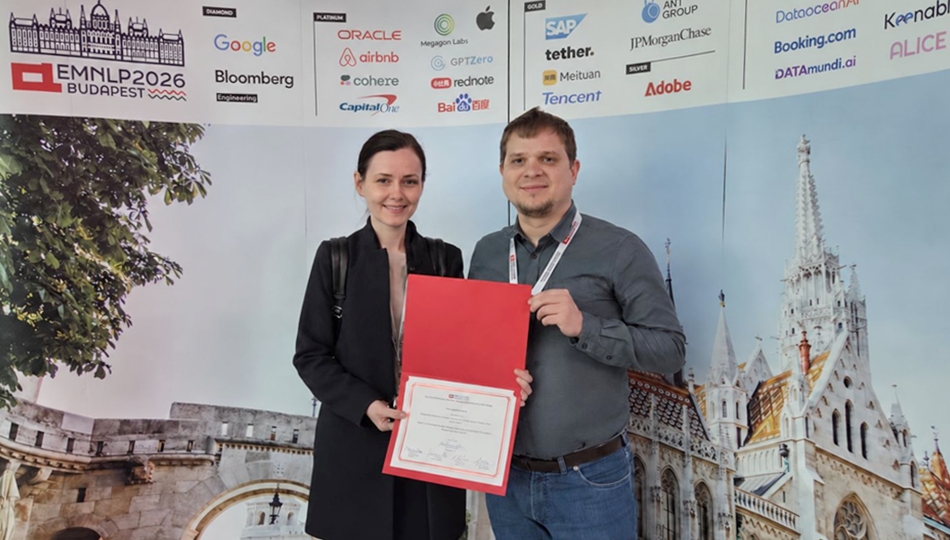
On September 3–4, he took part in the Indo-German Bilateral Workshop on Green AI for Healthcare and Mental Wellness at IIT Delhi. It was organized by Prof. Tanmoy Chakraborty (IIT Delhi) and Prof. Iryna Gurevych (TU Darmstadt). Sponsors were the Indo-German Science and Technology Center (IGSTC), established by India’s Department of Science and Technology and Germany’s Federal Ministry of Research, Technology and Space.
The workshop looked at the environmental and social costs of generative AI and how to build efficient models for real healthcare settings. About 30 experts and early-career researchers from both countries took part through keynotes, technical sessions, panels, and poster presentations. The discussions covered:
- energy-efficient AI for healthcare and mental wellness
- applications in medical imaging, clinical decision support, mental health, and multilingual healthcare
- the technical, infrastructural, regulatory, and ethical hurdles of deploying AI across very different healthcare systems
- a roadmap for joint Indo-German research, innovation, and capacity building
The visit ended on September 7 with a talk at Prof. Chakraborty’s research group at IIT Delhi, followed by an open discussion with the group’s students about their work.
Takeaways
- Efficiency is part of the research question.
According to Prof. Chakraborty, the next frontier of AI is not simply about building larger models. It is about systems that are efficient, sustainable, trustworthy, and accessible. - Multilingual healthcare is a shared priority.
With so many languages spoken across India, AI for health has to work well beyond English. This directly relates to our work in Dresden on multilingual and trustworthy language models. - Trust matters in every setting.
A scientist reading the literature and a clinician using a decision-support tool need the same thing: answers they can check against the sources. - Both sides want to work together.
IGSTC Director Dr. Kusumita Arora expressed the hope that the new partnerships will lead to lasting innovations that make a difference in practice.
Outlook
Our thanks go to Dr. Sourabrata Mukherjee, Dr. Danish Pruthi, Prof. Md. Shad Akhtar, Prof. Tanmoy Chakraborty, Prof. Iryna Gurevych, the team at Microsoft Research India, and IGSTC for their time and hospitality. We look forward to turning these conversations into joint projects.
funded by:


ScaDS.AI Dresden/Leipzig (Center for Scalable Data Analytics and Artificial Intelligence) is a center for Data Science, Artificial Intelligence and Big Data with locations in Dresden and Leipzig.


Dresden
Visitor address
Technische Universität Dresden
ScaDS.AI Dresden/Leipzig
Bürogebäude Strehlener Straße
Strehlener Straße 12, 14
01069 Dresden
ScaDS.AI Dresden/Leipzig
Bürogebäude Strehlener Straße
Strehlener Straße 12, 14
01069 Dresden
Postal address
Technische Universität Dresden
Center for Interdisciplinary Digital Sciences (CIDS)
ScaDS.AI Dresden/Leipzig
01062 Dresden
Center for Interdisciplinary Digital Sciences (CIDS)
ScaDS.AI Dresden/Leipzig
01062 Dresden
Leipzig
Visitor address
ScaDS.AI Dresden/Leipzig
Löhrs Carré
Humboldtstraße 25, Uferstr. 11
04105 Leipzig
Löhrs Carré
Humboldtstraße 25, Uferstr. 11
04105 Leipzig
Postal address
Universität Leipzig
Data Science Center ScaDS.AI Leipzig
Internes Postfach: 322001
04081 Leipzig
Data Science Center ScaDS.AI Leipzig
Internes Postfach: 322001
04081 Leipzig
Quicklinks:
Copyright 2026 © SCADS.AI Dresden/Leipzig – All rights reserved.