October 2, 2026
Prof. Matthew E. Taylor Visits Dresden
Research
From September 20–24, 2026, ScaDS.AI Dresden/Leipzig welcomed Prof. Matthew E. Taylor (University of Alberta, Canada) as a guest in Dresden. His visit follows up on the 1,5 month long research stay of our PhD student Dianzhao Li with Prof. Taylor’s research group earlier this summer, strengthening the connections between his group, the Chair of Applied Statistics, and ScaDS.AI Dresden/Leipzig.
Program
Arrival, meeting with the Chair of Applied Statistics, and visiting the Living Lab
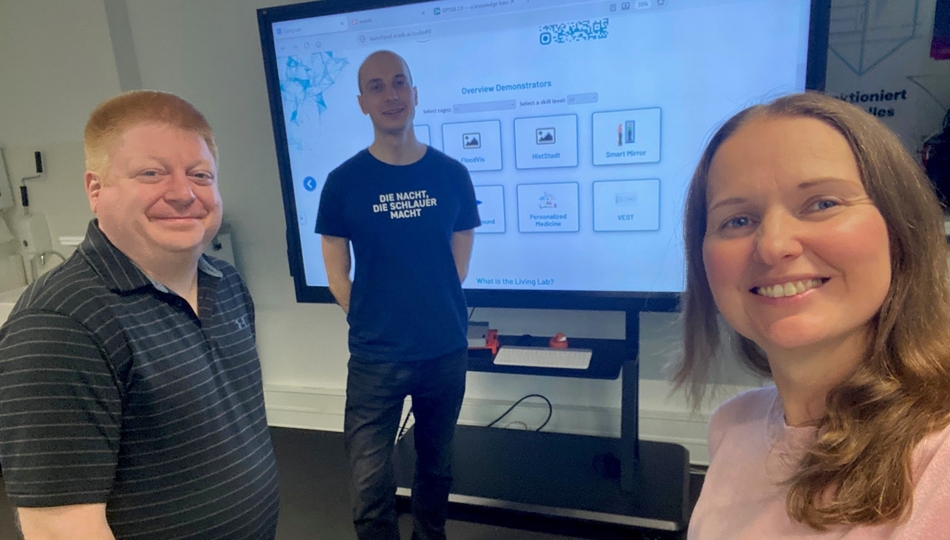
Prof. Matthew E. Taylor arrived in Dresden on September 20, 2026. He was welcomed by Prof. Ostap Okhrin, with whom he had lunch and discussed the itinerary of his visit. In the morning of September 21, 2026, Prof. Ostap Okhrin invited Prof. Matthew E. Taylor to visit his Chair of Applied Statistics. There, he had in-depth discussions with Prof. Ostap Okhrin as well as the PhD students Dianzhao Li and Stephan Meyer. After lunch, Prof. Matthew E. Taylor visited the Living Lab in Dresden. Dr. Iryna Okhrin and Moritz Müller introduced him to the lab and showcased some of our highlight demonstrators. Afterwards, he visited our office building at Strehlener Straße 14 in Dresden, where he had a meeting with Prof. Simon Razniewski, discussing current research directions.
General Assembly of ScaDS.AI Dresden/Leipzig
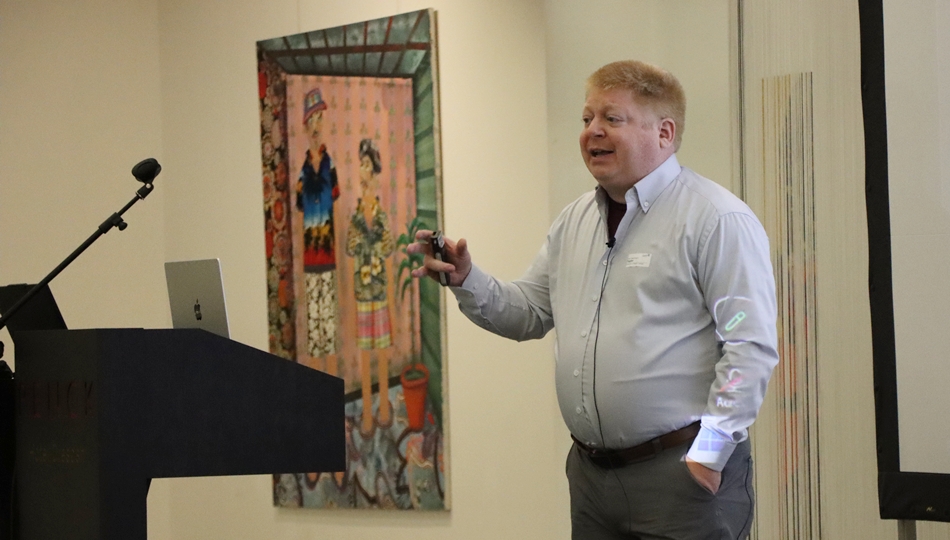
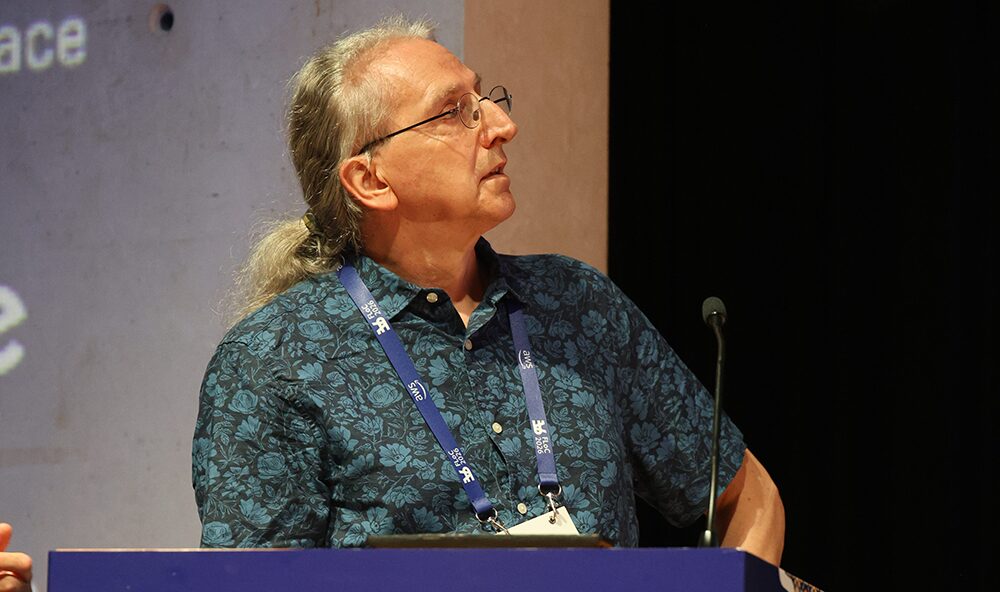
From September 22–23, 2026, Prof. Matthew E. Taylor joined our second General Assembly of the year. He contributed the keynote “Learning Well With Others: From Agent-Agent Advising to Human-AI Teams” to the program, providing the audience with an excellent insight into his research. The keynote covered learning from imperfect external knowledge: transfer, curricula, non-expert demonstrations, noisy evaluative feedback, and action advice, unified by a common challenge — estimating advisor quality online and staying robust when advice is bad. He showed how these mechanisms, formalized in multi-agent advising frameworks, apply in reverse when humans act on advice from imperfect AI, and why human-AI teams underperform without deliberate design. He closesd his keynote with open problems for interactive learning in the foundation-model era.
Afterwards, he met with many team members of ScaDS.AI Dresden/Leipzig, including Dr. Arthur Fleig, Dr. Nico Scherf, Oleh Shkalikov, and Ankit Anil Chaudhari. Prof. Matthew E. Taylor also took part in the poster session, visiting all the posters, getting into conversations with the PhD students, and providing his feedback on the presented work.
Concluding his visit
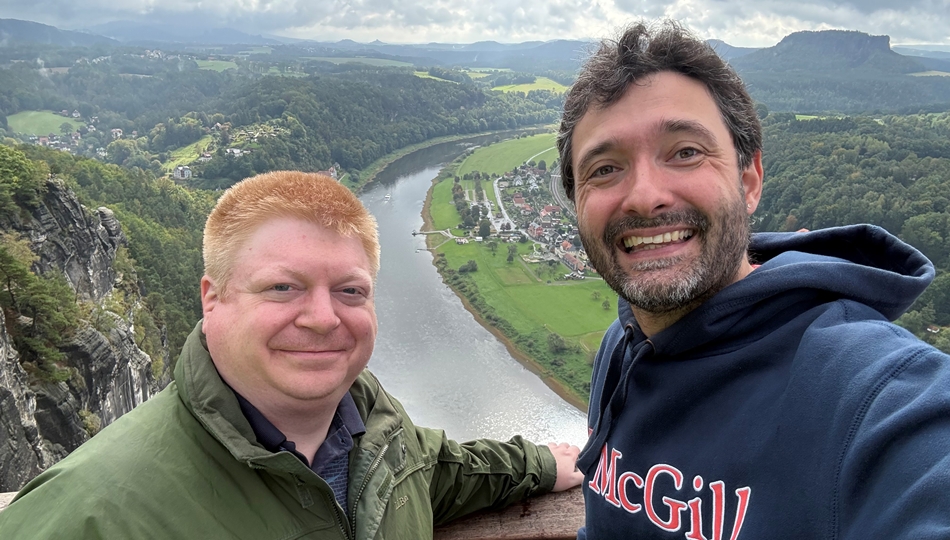
On September 24, 2026, he continued his discussions with the Chair of Applied Statistics. Accompanied by Prof. Ostap Okhrin, he later visited the national park of Saxon Switzerland as well as Pillnitz Palace, bringing a memorable end to his visit to Dresden before leaving early the next day.
Prof. Matthew E. Taylor
Prof. Matthew E. Taylor is a tenured associate professor in computer science at the University of Alberta in Canada. He is the director of the Intelligent Robot Learning Laboratory (IRL Lab), which was started in 2013 at Washington State University and moved to the University of Alberta in 2020. The Lab focusses its work on fundamental reinforcement learning research and applying artificial intelligence to real-world settings in both simulated and physical environments. Learn more about him here.
Drawing on Prof. Matthew E. Taylor’s extensive experience at the Alberta Machine Intelligence Institute (AMII), his visit also provided an excellent opportunity to exchange perspectives on the challenges faced by AI centers and to discuss practical approaches and solutions developed at both institutions. We thank him for being our guest and are looking forward to further collaborating in the future!
funded by:

ScaDS.AI Dresden/Leipzig (Center for Scalable Data Analytics and Artificial Intelligence) is a center for Data Science, Artificial Intelligence and Big Data with locations in Dresden and Leipzig.


Dresden
Visitor address
Technische Universität Dresden
ScaDS.AI Dresden/Leipzig
Bürogebäude Strehlener Straße
Strehlener Straße 12, 14
01069 Dresden
ScaDS.AI Dresden/Leipzig
Bürogebäude Strehlener Straße
Strehlener Straße 12, 14
01069 Dresden
Postal address
Technische Universität Dresden
Zentrum für Informationsdienste und Hochleistungsrechnen
ScaDS.AI Dresden/Leipzig
01062 Dresden
Zentrum für Informationsdienste und Hochleistungsrechnen
ScaDS.AI Dresden/Leipzig
01062 Dresden
Leipzig
Visitor address
ScaDS.AI Dresden/Leipzig
Löhrs Carré
Humboldtstraße 25, Uferstr. 11
04105 Leipzig
Löhrs Carré
Humboldtstraße 25, Uferstr. 11
04105 Leipzig
Postal address
Universität Leipzig
Data Science Center ScaDS.AI Leipzig
Internes Postfach: 322001
04081 Leipzig
Data Science Center ScaDS.AI Leipzig
Internes Postfach: 322001
04081 Leipzig
Quicklinks:
Copyright 2026 © SCADS.AI Dresden/Leipzig – All rights reserved.