February 26, 2026
Magic Mirror for Women in Science: Generative Image AI, Body Images, and Power
Events
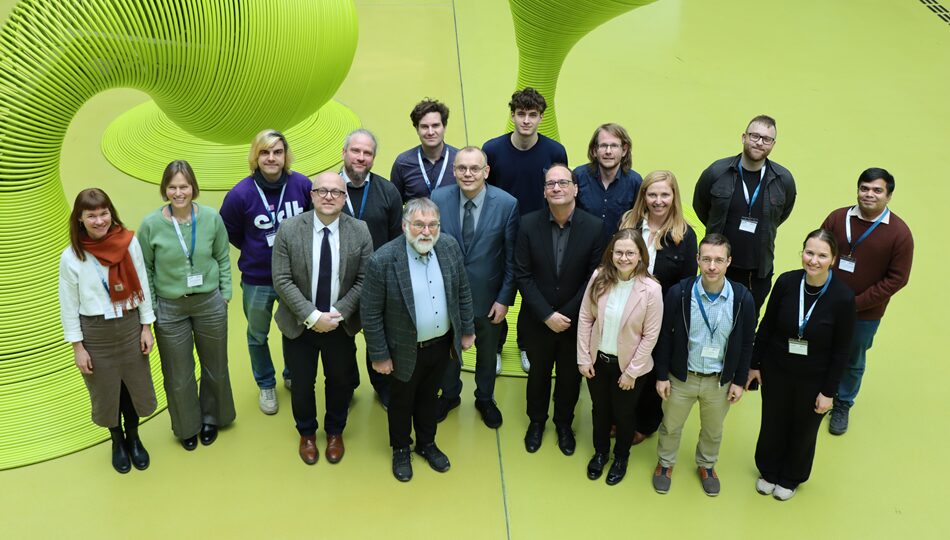
On February 11, 2026 was the International Day of Women and Girls in Science. Leipzig University organized a comprehensive program with the motto “Women in Science 2026 – Alliances for Change” and hosted events designed to dismantle structural barriers. The program strengthened networks and addressed gender-specific challenges in academia and research.
The Magic Mirror as an Insight into AI Generated Images
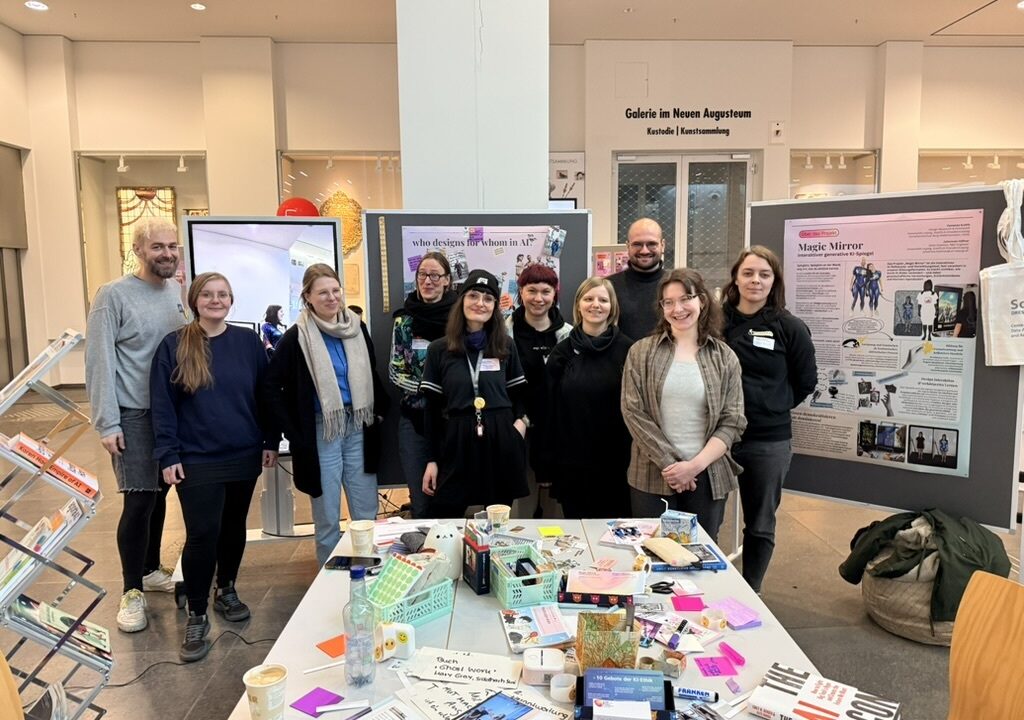
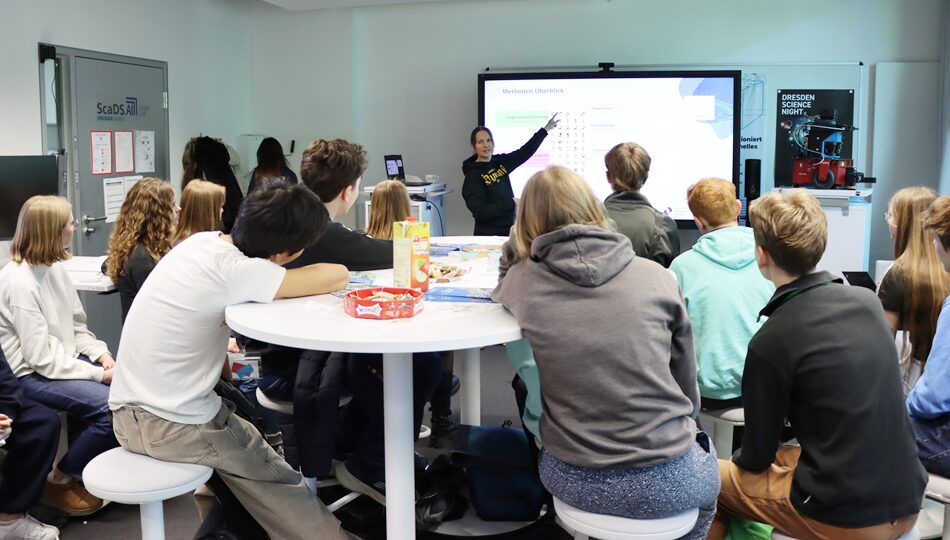
Vanessa Kuhfs from ScaDS.AI Dresden/Leipzig presented the interactive project Magic Mirror together with Johannes Häfner and their team. From the outside, generative AI often appears neutral and doesn’t show its reflections of social norms, embedded biases, and existing power structures. In contrast, the Magic Mirror makes these dynamics visible and opens a discussion. By this, participants understand how AI systems make decisions, which attributes they assign, and how concepts of fairness emerge in their own digital reflection.
The installation focused on “Generative Image AI, Body Images, and Power” and allowed visitors to contribute personal experiences and test the system directly. The mirror reveals how AI works, clarifies algorithmic choices, and exposes stereotypical outputs. Anyone could participate by taking a photo and describing how they wanted to appear, the system generated an AI-based image aligned with their input.
Feminist AI Research
The results quickly revealed persistent stereotypes. The AI frequently uses gender images that do not match the real person. That is because the training data used by AI significantly determines the output. The Magic Mirror clearly shows participants that the result may have little to do with reality or the expectations of the person concerned. At the same time, feminist moderation ensured respectful and safe reflection.
The initiative promoted responsibility, critical judgment, and agency in dealing with generative AI. Beyond the installation, Vanessa Kuhfs examined the structural dominance of Western, male-centered frameworks in design practice. She demonstrated how these perspectives shape technical decisions, ethical standards, and cultural assumptions in AI systems. By linking historical precedents with current research, she showed how such asymmetries limit inclusivity and reduce cross-cultural responsiveness.
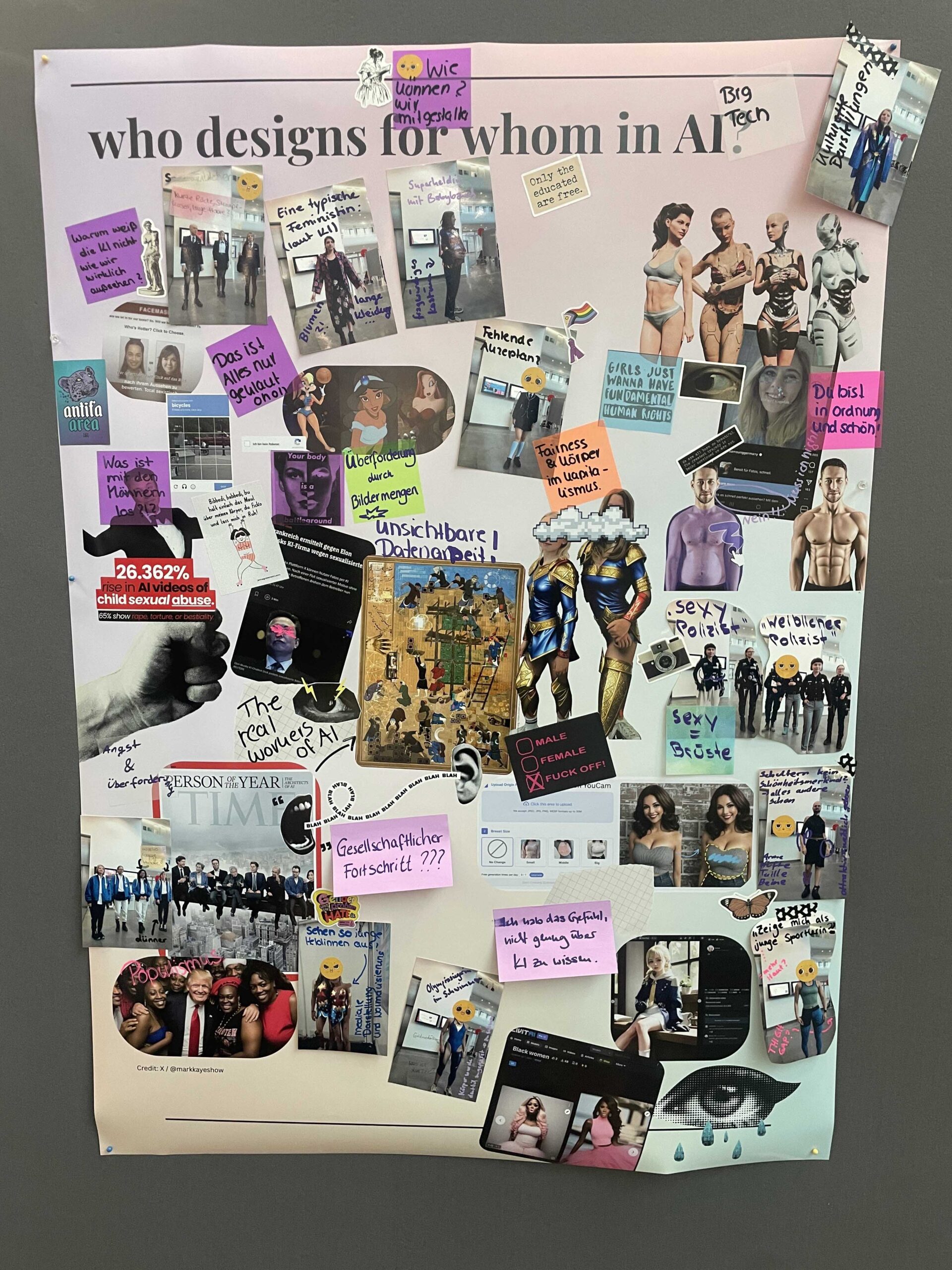
Overall, the day was a great success. Students came specifically to try out the mirror, and some passersby were also enthusiastic about it. The participants took plenty of time to try out the Magic Mirror and to record their thoughts and reflections on a shared poster.
funded by:

ScaDS.AI Dresden/Leipzig (Center for Scalable Data Analytics and Artificial Intelligence) is a center for Data Science, Artificial Intelligence and Big Data with locations in Dresden and Leipzig.


Dresden
Visitor address
Technische Universität Dresden
ScaDS.AI Dresden/Leipzig
Bürogebäude Strehlener Straße
Strehlener Straße 12, 14
01069 Dresden
ScaDS.AI Dresden/Leipzig
Bürogebäude Strehlener Straße
Strehlener Straße 12, 14
01069 Dresden
Postal address
Technische Universität Dresden
Zentrum für Informationsdienste und Hochleistungsrechnen
ScaDS.AI Dresden/Leipzig
01062 Dresden
Zentrum für Informationsdienste und Hochleistungsrechnen
ScaDS.AI Dresden/Leipzig
01062 Dresden
Leipzig
Visitor address
ScaDS.AI Dresden/Leipzig
Löhrs Carré
Humboldtstraße 25, Uferstr. 11
04105 Leipzig
Löhrs Carré
Humboldtstraße 25, Uferstr. 11
04105 Leipzig
Postal address
Universität Leipzig
Data Science Center ScaDS.AI Leipzig
Internes Postfach: 322001
04081 Leipzig
Data Science Center ScaDS.AI Leipzig
Internes Postfach: 322001
04081 Leipzig
Quicklinks:
Copyright 2026 © SCADS.AI Dresden/Leipzig – All rights reserved.